



Technological Innovations in Fully Automatic Nutrition Bar Production Equipment
If you want to know more story about LOYAL brand, here can help you - https://www.facebook.com/foodmachineloyal
The evolution of fully automatic nutrition bar production equipment is closely tied to the growing industry demand for higher efficiency, lower energy consumption, and more stable product consistency. As consumer preferences shift toward health-oriented products, manufacturers increasingly rely on advanced automation to support large-scale and standardized production. This transition has positioned the fully automatic nutrition bar production line as the central technological pathway for modernizing processing operations. The integration of digital control, precision mechanics, and intelligent monitoring has enabled the industry to move from semi-manual processes toward highly coordinated, energy-efficient production systems.
A primary driver of this evolution is the industry’s need to optimize cost structures while maintaining high output and uniform quality. Manufacturers require equipment capable of reducing raw-material waste, ensuring precise ingredient ratios, and maintaining consistent forming accuracy. Fully automatic nutrition bar production equipment addresses these needs through automated feeding systems, servo-controlled forming units, and programmable heating modules. These innovations collectively reduce energy fluctuations, enhance thermal efficiency, and improve the overall sustainability of the manufacturing environment.
The rapid advancement of industrial intelligence also plays a crucial role. As digital transformation accelerates, the nutrition bar production line increasingly incorporates technologies such as automated data collection, algorithm-based temperature management, and real-time equipment diagnostics. These features allow operators to manage processing parameters more effectively while minimizing manual intervention. The result is a predictable, stable, and energy-optimized production environment capable of continuous operation.
In the broader context of industry upgrading, fully automatic nutrition bar production equipment contributes to enhanced production scalability and improved process control. Equipment modularization allows manufacturers to integrate mixing, extrusion, shaping, cooling, and packaging into streamlined workflows. This system-level integration not only elevates productivity but also establishes a platform for future intelligent manufacturing upgrades such as remote monitoring, predictive maintenance, and energy-efficiency benchmarking.
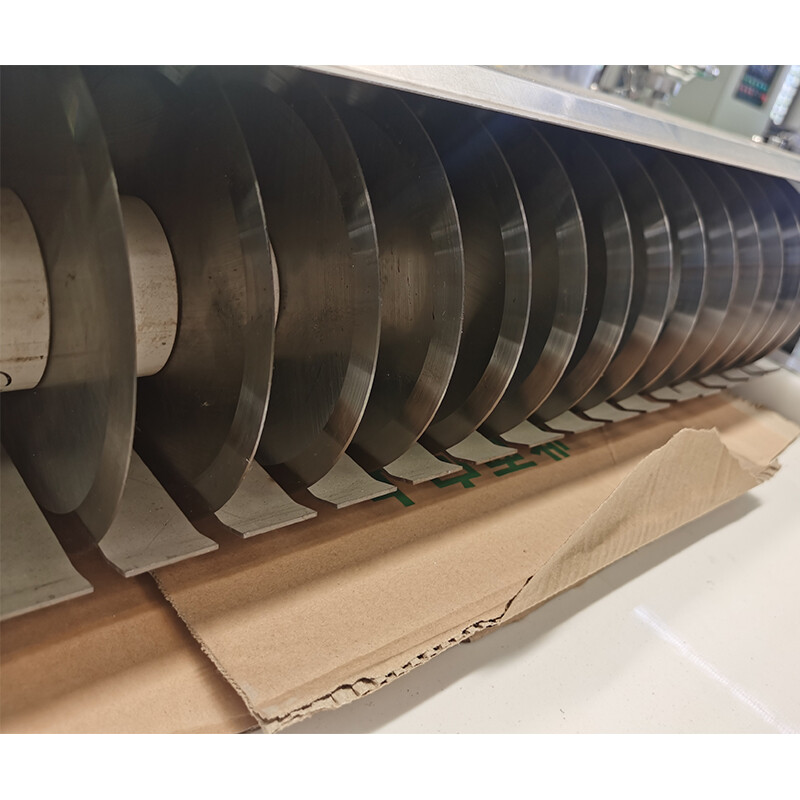
Key Drivers of Technological Evolution in Nutrition Bar Production Systems
Driver Category | Impact on Equipment Development | Relevance to High-Efficiency Production |
| Automation Demand | Enhances precision and stability | Reduces manual error and energy waste |
| Digital Intelligence | Enables real-time monitoring and control | Improves process predictability |
| Energy Optimization | Introduces more efficient heating and motion systems | Lowers operational energy consumption |
| Industry Scaling Needs | Supports standardized, continuous production | Strengthens competitiveness |
Key Technologies for Achieving High Efficiency and Energy Savings in Fully Automatic Nutrition Bar Production Lines
Achieving high efficiency and energy savings within a fully automatic nutrition bar production line relies on a combination of precise control technologies, optimized mechanical systems, and integrated energy-management solutions. As production requirements continue to rise, manufacturers prioritize equipment that stabilizes processing conditions, lowers operational energy consumption, and enhances the uniformity of finished products. The design of modern nutrition bar production equipment incorporates advanced automation to ensure consistent performance across batching, extrusion, forming, and thermal treatment stages.
Automated batching is one of the foundational technologies enabling energy reduction. Precise dosing minimizes material deviation, preventing overmixing and unnecessary mechanical load. Servo-driven feeders and digital weight-feedback systems maintain stable ingredient ratios, reducing the likelihood of process corrections that increase energy use. Equally important is the implementation of intelligent control algorithms that adjust motor speed, heating cycles, and torque output according to real-time production demands. These automated adjustments allow the nutrition bar production line to operate under the most energy-efficient conditions throughout the production cycle.
In extrusion, forming, and drying processes, the focus shifts toward mechanical optimization and thermal efficiency. Modern extruders used in nutrition bar production equipment often employ variable-frequency drive systems, enabling precise control of screw speed and reducing excess power consumption. Similarly, forming mechanisms benefit from servo-actuated systems that enhance shaping accuracy while minimizing mechanical resistance. Thermal units, especially drying tunnels, integrate optimized airflow distribution, insulated chamber designs, and staged heating control to minimize heat loss and shorten processing time.
Energy management technologies further reinforce overall efficiency. Equipment developers incorporate real-time monitoring tools that analyze energy usage across motors, heaters, and conveyors. This allows production teams to identify inefficiencies, adjust consumption patterns, and maintain stable energy loads. Innovations such as low-friction components, high-efficiency motors, and heat-recovery modules contribute additional energy savings and enhance equipment durability.
Key Technologies Supporting Energy-Efficient Nutrition Bar Production
Technology Category | Technical Features | Contribution to Efficiency |
| Automated Batching & Control | Servo dosing, algorithm-based regulation | Reduces energy deviation and material waste |
| Intelligent Extrusion & Forming | Variable-frequency drives, servo forming | Lowers power consumption and improves accuracy |
| Optimized Drying Systems | Insulated chambers, staged heating | Minimizes heat loss and processing time |
| Energy Management Tools | Real-time monitoring, load balancing | Ensures stable and efficient equipment operation |
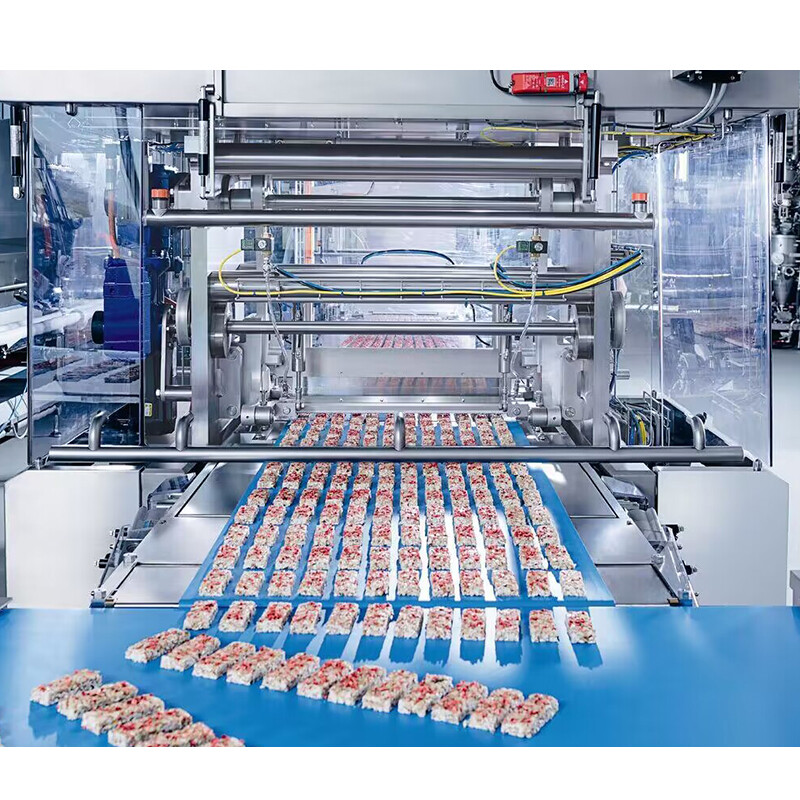
Collaborative Optimization and System Integration of Nutrition Bar Equipment
Collaborative optimization within a fully automatic nutrition bar production line is essential for achieving stable, high-efficiency operation. As processing technology advances, manufacturers increasingly emphasize the integration of mechanical systems, control software, and real-time monitoring platforms. This system-level coordination enables each processing module—mixing, extrusion, forming, cooling, and packaging—to function as a unified and energy-efficient production ecosystem. The objective is to ensure that every component of the nutrition bar production equipment operates in synchronization, minimizing downtime, material loss, and unnecessary energy expenditure.
A major aspect of collaboration involves establishing effective communication mechanisms between equipment units. Modern processing systems employ standardized data interfaces and intelligent controllers capable of exchanging temperature, torque, speed, and material-flow information across the entire nutrition bar production line. This integrated data flow ensures that upstream and downstream equipment adjust parameters in real time, maintaining consistent product texture and forming accuracy while avoiding overloading or underutilization of machinery. Such coordination contributes directly to reduced energy fluctuations and improved mechanical stability.
Integrated nutrition bar production equipment also enhances efficiency through streamlined mechanical design and modular engineering. When extrusion, forming, and cooling components are designed for interdependent operation, mechanical transitions become smoother and more energy efficient. Precise conveyor synchronization prevents product accumulation or gaps, reducing friction-related energy loss. Modular integration further allows manufacturers to expand or adapt the production line without compromising system balance or energy performance.
In addition to mechanical coordination, software-driven system integration plays a critical role. Centralized control platforms collect operational data, manage processing sequences, and coordinate energy allocation across different stages. Predictive algorithms support consistent load distribution, ensuring that motors, heaters, and conveyors maintain optimal performance ranges. This software-enabled harmonization strengthens the long-term reliability and sustainability of the nutrition bar production line.
System Integration Elements in Nutrition Bar Production Equipment
Integration Category | Functional Role | Contribution to Efficiency |
| Equipment Communication | Data exchange among modules | Stabilizes process flow and reduces energy deviation |
| Mechanical Synchronization | Coordinated motion and transfer | Minimizes friction and mechanical load |
| Modular Engineering | Flexible, unified equipment structure | Enhances scalability and system balance |

Energy-Saving Materials and Structural Innovations in Fully Automatic Nutrition Bar Production Equipment
Energy-saving innovation in fully automatic nutrition bar production equipment increasingly depends on advancements in structural engineering and the adoption of new materials designed to reduce operational load, improve thermal efficiency, and extend equipment lifespan. As the industry places greater emphasis on sustainability, manufacturers prioritize design strategies that optimize both mechanical performance and energy consumption throughout the entire nutrition bar production line. These improvements support long-term operational stability while lowering the overall energy cost per unit of production.
Lightweight structural design is one of the most significant contributors to energy reduction. By utilizing optimized frame geometries, reinforced alloys, and high-strength composite components, equipment developers can reduce mechanical inertia without compromising structural integrity. Lower machine mass directly decreases the power required for motion control, particularly in continuous conveying, forming, and cutting systems. This reduction allows motors and servo units to operate at more efficient load levels, supporting smoother transitions between processing stages and minimizing unnecessary energy expenditure across the nutrition bar production line.
Alongside structural optimization, advancements in heating-system technology play a central role in improving energy performance. Modern thermal units integrated into nutrition bar production equipment frequently adopt energy-saving heating modules with improved insulation, faster temperature response, and more accurate thermal distribution. These systems reduce heat loss during drying, cooking, or bonding steps, allowing production processes to maintain stable temperature profiles with lower energy input. The incorporation of staged heating, infrared-assisted modules, or precision-controlled convection further supports uniform product quality while lowering total heat consumption.
Eco-friendly and durable materials also contribute significantly to energy efficiency. High-performance insulation materials reduce thermal dissipation in heating zones, while low-friction surface coatings decrease mechanical resistance within extrusion, forming, and transfer components. These materials extend machine longevity and reduce the need for frequent recalibration, ensuring that equipment maintains optimal energy performance over longer production cycles. In addition, corrosion-resistant and food-grade materials enhance hygiene compliance, reducing cleaning frequency and supporting more efficient line operation.
Balancing durability and energy usage remains a core engineering challenge. Fully automatic nutrition bar production equipment must withstand continuous, high-intensity operation while maintaining low energy demand. Achieving this balance requires a combination of robust mechanical design, optimized component weight, and strategically selected materials that support both mechanical reliability and energy-efficient operation. When effectively integrated, these innovations create a more stable, sustainable, and high-performance nutrition bar production line, positioning manufacturers for future advancements in intelligent and environmentally responsible food processing.
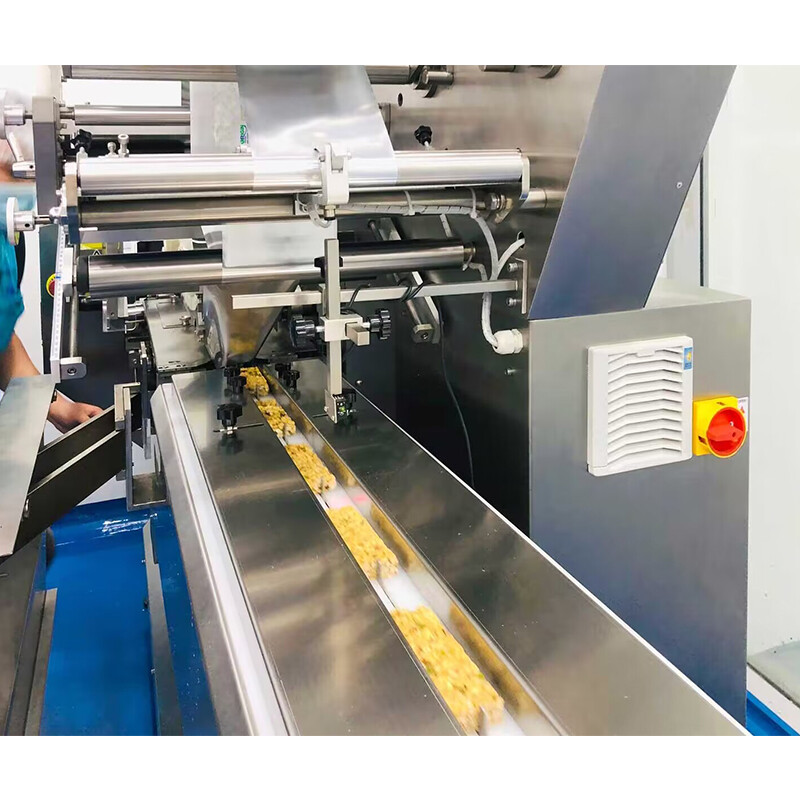
General Pathways and Future Direction for High-Efficiency, Energy-Saving Nutrition Bar Production Lines
Transitioning toward a high-efficiency and energy-saving fully automatic nutrition bar production line requires a structured approach that integrates technological upgrades, process refinement, and comprehensive resource management. Manufacturers typically progress through a series of coordinated steps that include evaluating baseline energy consumption, identifying inefficiencies in mechanical and thermal systems, and implementing targeted improvements across mixing, extrusion, forming, and cooling stages. These systematic enhancements enable the production line to achieve stable operation, reduce energy fluctuations, and improve overall throughput. A well-defined transition framework ensures that equipment performance aligns with evolving production demands and regulatory expectations for sustainability.
A crucial pathway involves the continuous modernization of nutrition bar production equipment through digitalization and automation. As industrial technologies advance, more equipment integrates intelligent control systems capable of real-time data acquisition, predictive energy allocation, and adaptive process regulation. These features support more efficient operation by stabilizing load distribution, minimizing unnecessary equipment cycles, and maintaining consistent product profiles across extended production runs. Digital platforms also provide manufacturers with deeper insights into processing variables, enabling more accurate equipment tuning and long-term energy optimization.
Looking ahead, the future development of the nutrition bar production line is expected to center on deeper intelligentization, modular system expansion, and environmentally aligned engineering practices. Equipment will increasingly incorporate advanced monitoring algorithms, self-adjusting control systems, and energy-adaptive motors to maintain optimal performance under variable production conditions. At the same time, modular equipment configurations will allow production lines to scale efficiently without compromising energy performance or operational balance.
Sustainability will remain a dominant driver of innovation. The next generation of nutrition bar production equipment is likely to adopt more efficient heating systems, higher-performance insulation materials, and components designed to reduce friction, heat loss, and mechanical resistance. These advancements will reinforce the industry’s shift toward greener, more automated, and more resource-efficient manufacturing environments. Collectively, these future directions will position the nutrition bar production line to meet rising production demands while supporting global trends toward low-carbon and intelligent food processing.
Integrated Innovation of Fully Automated Nutrition Bar Production Equipment for High-Efficiency and Energy-Saving Manufacturing
The continuous advancement of food processing technology has accelerated the modernization of nutrition bar production lines, pushing manufacturers to pursue higher efficiency, improved product quality, and reduced operational costs. In this context, fully automated nutrition bar production equipment has become a key driver for industry transformation, enabling producers to achieve stable, scalable, and energy-efficient manufacturing.
Modern nutrition bar manufacturing equipment integrates automatic batching, precise mixing, intelligent forming, and continuous cooling and cutting systems. These technologies significantly reduce manual intervention, maintain uniform product texture, and enhance the consistency of nutritional ingredients. By utilizing servo-controlled extrusion and temperature-regulated forming modules, the equipment ensures product stability while minimizing energy fluctuations during processing.
Energy-saving design is another core advantage. The latest systems adopt optimized heating structures, insulated transmission paths, and smart power-distribution algorithms. These improvements reduce wastage and stabilize equipment output, allowing the production line to operate with lower energy consumption even under high-capacity conditions. In addition, sensors and data-driven monitoring platforms offer real-time feedback on temperature, moisture, and mechanical load, helping operators identify inefficiencies and adjust parameters instantly.
Automation also contributes to production safety and hygiene. Enclosed processing zones, CIP cleaning compatibility, and stainless-steel structures aligned with food-grade standards reduce contamination risks and improve compliance with international regulations.
Furthermore, the seamless compatibility between various units—mixing, compression, cutting, and packaging—enables the nutrition bar production line to achieve flexible product switching without major mechanical adjustments. This enhances overall productivity and shortens the time required for product changeovers, helping manufacturers meet diverse market demands.
Overall, fully automated nutrition bar equipment is reshaping the competitive landscape of the industry. By integrating high-precision control, energy-saving design, and intelligent automation, these systems support manufacturers in achieving efficient, sustainable, and cost-effective production, ultimately accelerating the evolution of the global nutrition bar market.

Reference
The following are five authoritative foreign literature websites in the field of Industrial food machinery:
1. Food Engineering Magazine
Website: https://www.foodengineeringmag.com/
2.Food Processing Magazine
Website: https://www.foodprocessing.com/
3.Journal of Food Engineering
Website: https://www.journals.elsevier.com/journal-of-food-engineering
4. Food Manufacturing Magazine
Website: https://www.foodmanufacturing.com/
5. International Journal of Food Science & Technology
Website: https://onlinelibrary.wiley.com/