



Thinking about investing in breadcrumb production? Read this equipment selection guide before you decide
Introduction – Why the Breadcrumb Production Line Is a “Hidden Champion”
When you bite into a piece of golden, crispy fried chicken or taste the light, airy coating of tempura, what creates that satisfying crunch is often not the meat itself, but the thin layer of breadcrumbs wrapped around it. Breadcrumbs are not just a coating; they carry flavor and define texture. Yet in the world of food manufacturing, the breadcrumb production line rarely gets the spotlight. It lacks the obvious appeal of meat processing lines or the visibility of packaging equipment. However, this automated system—made up of mixers, extruders, dryers, pulverizers, and screens—quietly supports the quality standards of the global fast food, prepared food, and frozen food markets, which together are worth trillions.
Why is the breadcrumb production line considered a “hidden champion” in food machinery? There are three main reasons.
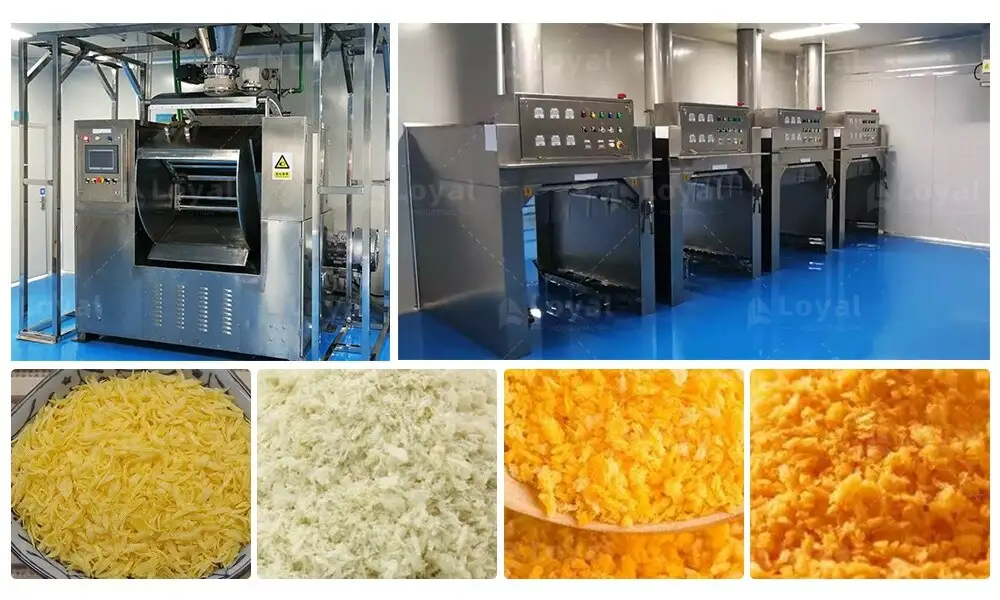
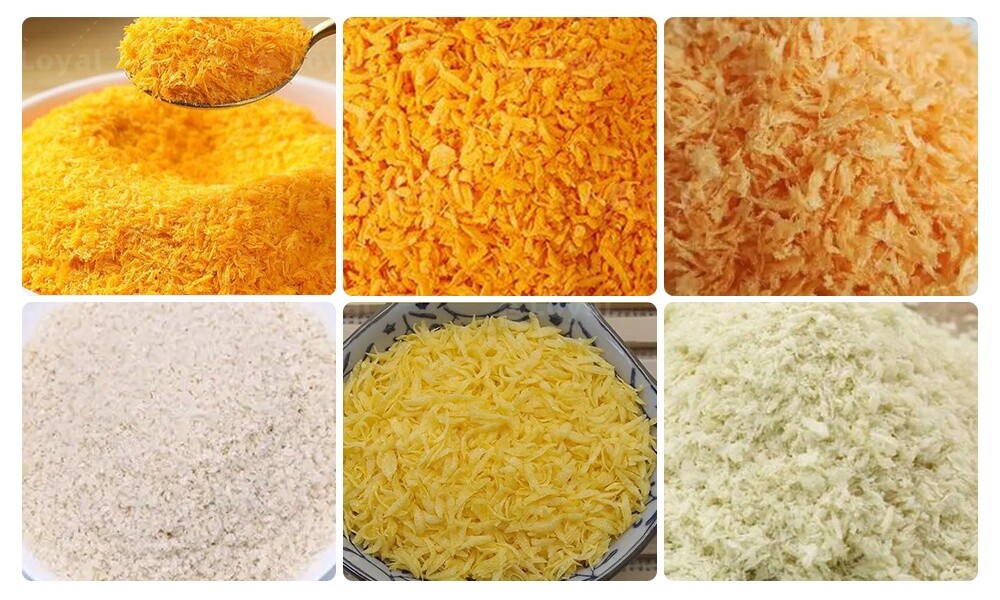
First, it drives the “texture economy.”As modern consumers demand crispy textures that stay crunchy even after reheating, high-quality breadcrumbs have become essential. Whether it’s a fast food chain requiring consistent results or a home cook using an air fryer, the quality of the breadcrumb coating makes a big difference. A well designed production line can precisely control particle shape, density, and oil absorption, ensuring that the final product remains appealing after freezing and reheating. In short, the quality of breadcrumbs often sets the limit for how good a fried product can be.
Second, it integrates complex technology and processes.Today’s breadcrumb production lines have come a long way from simply crushing dried bread. Modern lines rely on precise automatic dosing, twin screw extruders that manage temperature and shear force with great accuracy, and multi layer dryers that control moisture levels exactly. Every stage reflects a deep integration of food science and mechanical engineering. This is especially true for extruded breadcrumbs, where the technical sophistication of the equipment determines whether the product becomes a basic filler or a high value ingredient.
Third, it balances investment returns with operating efficiency.For food manufacturers, investing in a breadcrumb production line often means moving upstream to secure a key ingredient. But success depends on many details: does the equipment match the product type? Is energy consumption reasonable? Can the line switch between different recipes quickly to handle diverse orders? These details, hidden behind impressive capacity figures, often decide whether the project increases profitability or adds operational burdens. That is why understanding and choosing the right production line is a critical step for investors.
This article aims to give readers a clear overview of the key components and processes in a modern extruded breadcrumb production line. More importantly, it offers practical guidance on how to select the right system. Whether you are planning a new factory or upgrading an existing line, I hope this article helps you avoid common mistakes and find the production line that truly fits your product needs and business goals.
Production Line Overview – How the Equipment Works Together
A complete bread crumb panko production line making machinery consists of several machines connected in a sequence. From the moment raw materials enter the workshop to the time finished products are packed, materials flow through a closed system in an orderly way. Each step contributes to the texture, color, and stability of the final breadcrumbs. Let’s follow the production process step by step.
Model | InstalledPower | PowerConsumption | Output | Size ( L*W*H ) |
LY65 Bread Crumb Process Line | 55.36kw | 36kw | 100-150kg/h | 30400×2000×2200mm |
LY70 Bread Crumb Process Line | 95.76kw | 62.24kw | 250-300kg/h | 32500×2000×2600mm |
LY85 Bread Crumb Process Line | 140.76kw | 106kw | 350-400kg/h | 33000×3000×3000mm |
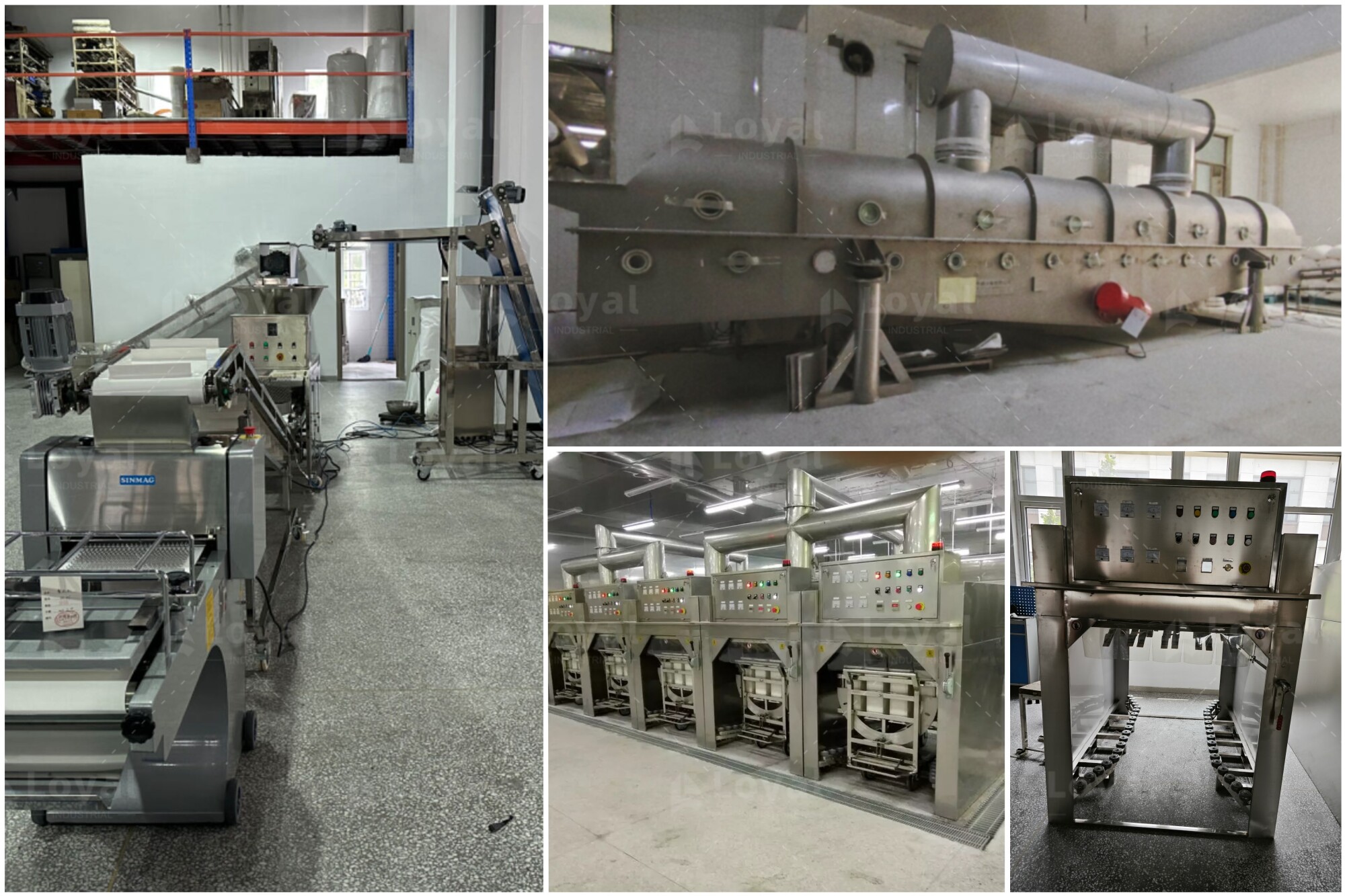
Breadcrumb Production Line Operation Process
1. Feeding – A Clean Start
The first step is feeding the raw materials. Operators pour flour, starch, sugar, salt, and other ingredients into a dust free feeding station. This equipment uses negative pressure to capture dust during feeding, keeping the workshop clean and reducing material waste. A vibrating screen is usually attached to remove lumps or foreign particles, ensuring only clean materials enter the production line.
2. Mixing – Uniformity Is Key
After feeding, the materials go into a ribbon mixer. Inside the mixer, ribbon shaped blades rotate to blend all the dry ingredients thoroughly. This step may seem simple, but it is very important. Whether the ratio of flour, water, sugar, and salt is evenly distributed affects the stability of the next steps and determines the final color and flavor of the breadcrumbs.
3. Extrusion – Creating the Crunchy Structure
The mixed powder is then sent to a twin screw extruder, which is the core of the production line. Inside the extruder, twin screws push the material forward while applying controlled heat and strong shear forces. The combination of mechanical and thermal energy cooks the starch, denatures proteins, and turns the material into a smooth, melted dough.
When the material is forced out through the die head, the pressure drops suddenly. Water vaporizes instantly, causing the product to expand into a light, porous structure. This step determines the crispiness and oil absorption of the breadcrumbs. Better expansion means a crunchier, lighter texture.
4. Pulverizing – Shaping the Particles
After expansion, the material is dried slightly and comes out in strips or chunks. It then enters a pulverizer to be broken into smaller particles. Inside the pulverizer, a high speed rotating blade or hammer impacts, cuts, and grinds the material to the desired size.
The rotation speed and screen size are the key controls. Low speed with larger screens is suitable for making coarse, flaky Japanese style breadcrumbs that keep their layered structure. High speed with finer screens produces fine, powder like breadcrumbs for applications that need a smoother texture.
5. Drying – Locking in Moisture and Color
After pulverizing, the material still contains some moisture and needs to be dried. Modern production lines often use a three layer dryer. Inside, three stacked conveyor belts move in opposite directions. The material spreads on the top belt, travels to the end, drops to the middle belt moving backward, then drops to the bottom belt. This back and forth path gives the material enough time to dry thoroughly.
Hot air circulates evenly through the dryer, removing moisture gradually. This step does more than just dry. With precise temperature control, the surface develops an appealing golden color, and the internal structure becomes stable, which helps extend shelf life.
6.Screening – Sorting for Quality
After drying, the material enters a vibrating square screen for classification. The screen usually has two or three layers. A vibrating motor creates a jumping motion that moves the material across the screen surfaces, allowing precise separation:
●The top screen holds back oversized particles and sends them back to the pulverizer for another round.
●The bottom screen removes very fine powder, which can be reused or treated as by‑product.
●The middle screen collects the uniform particles that become the final product.
Screening directly affects the uniformity of the finished particles, which in turn influences the commercial value of the product.
7. Packaging – The Final Step
The qualified product from the screening step is sent to a packaging machine. The machine automatically measures, fills, and seals the breadcrumbs into bags or boxes according to preset weight and packaging specifications. Automated packaging improves efficiency, ensures accurate weight, and maintains a good seal, protecting product quality during transport and storage.
Common Mistakes to Avoid
When purchasing a breadcrumb production line and choose bread crumbs supplier, many buyers focus mainly on capacity and price, overlooking some small details that can have a big impact later. Below are three common mistakes to help you make a smarter choice.
| Only Looking at Price, Ignoring Material and Workmanship | Many buyers compare quotes first and tend to choose the cheapest option. However, price differences often come from differences in material and workmanship. Parts that come into direct contact with food must be made of food grade 304 stainless steel or higher. If a manufacturer uses ordinary carbon steel or low quality stainless steel to cut costs, rust and coating peeling may occur over time. This not only affects product quality but also creates food safety risks. Welding quality also matters. Rough welds can trap material residues that are hard to clean. Over time, bacteria may grow, causing the product to exceed microbial limits. When inspecting equipment, pay attention to smoothness on the inside, the finish of welds, and whether there are hard to clean spots.
|
| Thinking “More Pulverizer Power Means Better Results” | The pulverizer plays a key role in shaping breadcrumb particles, but some buyers mistakenly believe that higher power and faster speed always give better results. This is not true. When the pulverizer runs at high speed, friction between the blades and material generates heat. If the speed is too high and there is no effective cooling, the material temperature rises quickly. This can burn the surface of the breadcrumbs, damage the internal structure, and turn a crispy texture hard or even give it a burnt taste. For manufacturers making coarse, flaky Japanese style breadcrumbs, overly high speed can break the layered structure, making the particles too fine and losing their unique texture. So when choosing a pulverizer, you should match the speed range and cooling system to your product type, rather than simply going for the biggest motor.
|
Overlooking Temperature Uniformity in the Dryer
| The dryer does more than remove moisture. It also finishes cooking the product and develops its color. But many buyers focus only on the number of layers and the power, ignoring how evenly the temperature is distributed. If the air flow design inside the dryer is poor, hot air cannot cover the entire belt evenly. This can cause some areas to overheat while others stay under dried. As a result, in the same batch, some breadcrumbs may turn too dark on the surface while others still have too much moisture inside. This uneven drying affects texture, shortens shelf life, and can even lead to mold growth. When evaluating a dryer, ask about the air flow design and, if possible, request a temperature distribution test. A good dryer should maintain even temperatures across the drying zone with only small variations.
|
Reference
1. Food Processing:
Website: [Food Processing](https://www.foodprocessing.com/)
2. Food Engineering:
Website: [Food Engineering](https://www.foodengineeringmag.com/)
3. Process Industry Forum:
Website: [Process Industry Forum](https://www.processindustryforum.com/)
4. Food Manufacture:
Website: [Food Manufacture](https://www.foodmanufacture.co.uk/)