



Milestone Dispatched: 100kg/h Pasta Production Line Shipped to Angola
In the highly competitive global food manufacturing sector, expanding operational capabilities requires more than just high-performance machinery. It demands strategic technical support, rigorous quality control, and innovative logistics management. Recently, our organization celebrated a major international milestone by successfully dispatching a customized 100 kg/h pasta production line to our valued corporate partner in Angola.
This project reflects our unwavering commitment to empowering international food producers. By engineering an automated manufacturing system and executing an innovative cargo-loading strategy, our team ensured that this shipment delivered maximum technical value while directly optimizing the client's upfront capital expenditures.
Inside the Engineering: The Core Production Sequence
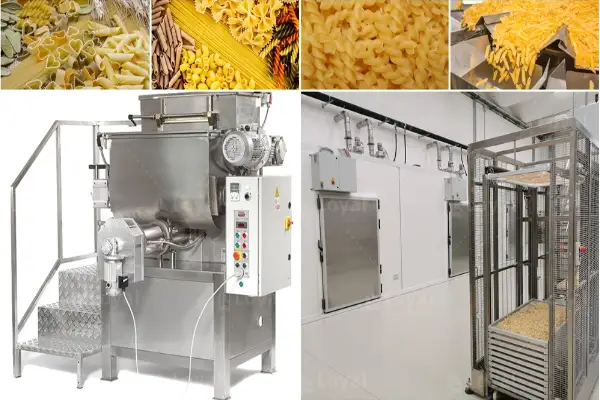
The dispatched 100 kg/h manufacturing system operates on an automated, continuous processing model. Every stage of the system complies with international food-grade standardization and sanitary regulations, ensuring an efficient, closed-loop process from raw ingredient input to retail-ready packaging. The production sequence consists of five critical engineering phases:
1. Precision Ingredient Dosing and Hydration
The line utilizes durum wheat semolina as its core structural ingredient, though the system can adapt to whole wheat, gluten-free, or alternative grain flours based on regional consumer demand. A computerized, automated dispensing system controls the water-to-flour ratio. Typically, every 100 kg of wheat semolina is precisely blended with 25 to 30 kg of purified water. The water temperature is held between 35°C and 45°C to maximize starch absorption and gluten hydration. Specialty ingredients—such as liquid egg or natural vegetable juices—can be introduced at this stage to enrich both nutritional profiles and visual appeal, with all parameters strictly monitored to ensure uniform batch consistency.
2. Advanced Premixing and Deep Homogenization
Once dosed, the raw materials pass through a high-speed pre-mixing chamber before entering the primary blending station. Here, specialized mixing paddles and kneading blades work the mixture into a perfectly uniform, crumbly dough matrix. This phase prevents under-hydration or over-kneading, aligning the gluten structure to give the finished pasta its characteristic al dente bite and structural elasticity.
3. High-Pressure Extrusion and Form Molding
The homogenized dough is driven into a heavy-duty extrusion screw. Operating under constant, monitored hydraulic pressure, the dough is pressed through specialized, precision-engineered dies. This high-pressure extrusion phase determines the pasta's final geometry. The process yields a smooth, cleanly cut surface structure completely free of surface tearing, micro-fractures, or operational stickiness.
4. Gradient Thermal Dehydration and Structural Stabilization
Upon exiting the cutter head, the shaped pasta immediately enters a multi-stage drying tunnel. To prevent cracking or surface sealing, the system utilizes a precise gradient temperature control curve that gradually ramps internal temperatures from 45°C up to 75°C. This process reduces the pasta's moisture content to a stable threshold below 12%. This moisture reduction locks in the pasta's shape, optimizes its cooking stability, and establishes long-term shelf-life preservation at ambient room temperatures without the risk of spoilage or clumping.
5. Automated Inspection and Adaptable Packaging
After cooling, the dried pasta undergoes a final quality inspection to screen out out-of-specification units. The approved product then moves directly into the automated packaging module. This flexible packaging framework can be configured for a variety of bag styles and volumetric weights, allowing the client to serve commercial catering channels and consumer retail markets simultaneously.
Through this tightly controlled, closed-loop architecture, the system guarantees a reliable output of 100 kg of finished pasta per hour, providing a dependable foundation for commercial scaling.
Multi-Die Versatility: Strategic Market Segmentation
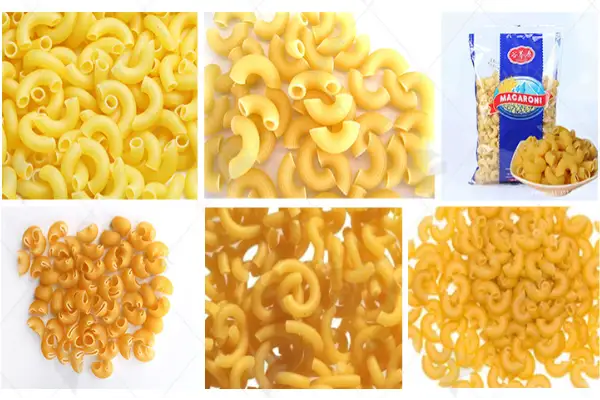
To help our Angolan partner capture market share quickly, our engineering team focused heavily on product versatility. In addition to the production line, we provided a comprehensive four-die configuration, which includes two complimentary commercial dies alongside two custom-ordered geometric dies purchased by the client.
These interchangeable dies allow the factory to adapt to diverse consumer preferences through four distinct product lines:
- Straight Long Pasta Line: Positioned as the universal B2B base segment, catering to traditional wholesale, high-volume catering, and everyday consumer staples.
- Fusilli and Spiral Pasta Line: Engineered with an optimized surface area to deliver a maximum sauce adhesion profile, capturing the premium culinary market and culinary enthusiasts.
- Conchiglie and Shell Pasta Line: A highly popular shape within youth demographics and family-oriented consumer segments, diversifying retail shelf appeal.
- Penne and Rigatoni Tubular Pasta Line: Focused entirely on premium retail consumer packaging, ideal for branding as a high-end pasta option in modern supermarkets.
All dies are manufactured from wear-resistant, food-grade alloys that minimize structural friction and heat buildup during high-pressure extrusion. The integration of a quick-change mechanical coupling allows factory operators to switch shapes with minimal downtime, preserving daily manufacturing efficiency and enabling rapid batch shifts.
Smart Freight Engineering: Maximizing Logistics Margins
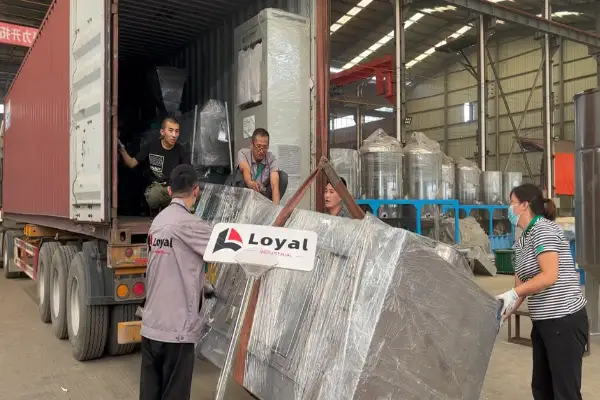
Industrial food processing machinery is inherently bulky, and international ocean freight can introduce substantial overhead costs. During the initial logistics planning stage, standard volumetric calculations indicated a high-overhead baseline logistics cost requiring two separate ocean containers. The breakdown originally mandated:
- One 40-Foot High Cube (40HQ) Container: Allocated exclusively for the main extrusion bodies, high-temperature multi-stage drying tunnels, and large structural frameworks.
- One 20-Foot General Purpose (20GP) Container: Allocated for auxiliary equipment, peripheral processing units, electrical control cabinets, modular dies, and critical spare parts kits.
Refusing to accept these duplicate shipping costs for our client, our logistics team initiated a complete spatial remodeling of the cargo layout. By measuring every structural node, component bracket, and sub-assembly module, our team engineered an innovative, nested packing scheme.
Through this optimized single-container strategy, we fully utilized the 76 cubic meters of internal volume available inside the 40HQ container, allowing for complete machinery consolidation. By carefully nesting auxiliary accessories into the open internal volumes of the larger structural machines, the 33-cubic-meter 20GP container was completely eliminated from the freight bill.
This advanced consolidation directly saved the client $4,000 USD in ocean transport expenses. Furthermore, it protects the equipment against shifting during maritime transit while reducing the client's overall landing costs to improve their initial operational margins.
Conclusion: A Shared Vision for African Food Processing
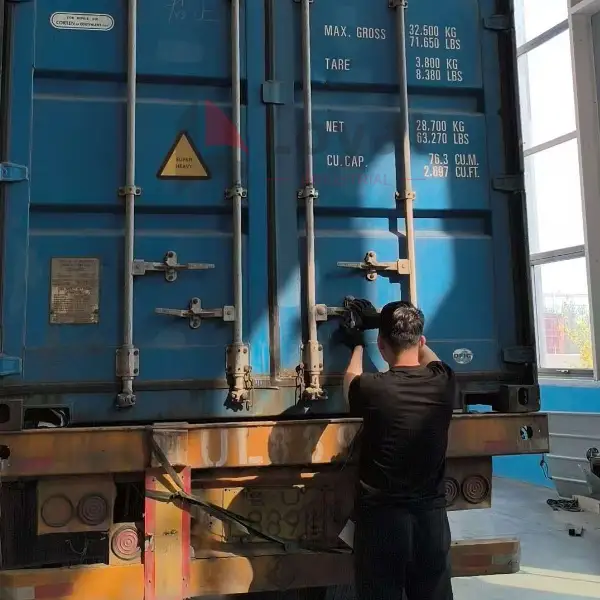
The departure of this 100 kg/h pasta production line from our port facility marks the official beginning of our partnership in Angola. In global business, a supplier’s responsibility does not end when the container is sealed.
As the cargo makes its journey across the ocean, our technical support engineers are preparing full installation blueprints, bilingual electrical schematics, and operational training guides. We will continue to provide remote engineering support and structured after-sales maintenance to ensure the equipment is commissioned quickly and safely. We look forward to seeing our partner bring high-quality pasta to the Angolan domestic market, driving long-term industrial growth and shared success.