

Optimizing Pet and Animal Food/Fish Feed Production Line Efficiency
If you want to know more story about LOYAL brand, here can help you - https://www.facebook.com/Foodextruderfactory/
Introduction to pet food production line Efficiency
Modern pet and animal food/fish feed production lines are the backbone of today’s thriving pet care and aquaculture industries. These advanced systems transform raw ingredients into nutritious, shelf-stable products, meeting the rising global demand for high-quality pet food and aquatic feed. At their core, pet and animal food process lines integrate precision machinery, automation, and stringent quality controls to ensure safety, consistency, and scalability.
Optimizing efficiency in these industrial-scale operations is no longer optional—it’s a competitive necessity. With pet ownership and fish farming expanding rapidly (the global pet food market alone is projected to exceed $165 billion by 2030), manufacturers must maximize output while minimizing waste and energy use. Streamlined pet and animal food process lines enable faster production cycles, reduce operational costs, and ensure compliance with evolving regulatory standards.
However, maintaining a workflow poses challenges. Variability in raw material quality, equipment wear-and-tear, and the need to adapt to diverse product formulations (e.g., grain-free pet food or specialized fish feed pellets) can disrupt pet and animal food/fish feed production line efficiency. Additionally, balancing speed with nutritional integrity requires meticulous process calibration. Addressing these hurdles is key to unlocking long-term profitability and sustainability in this dynamic sector.
Core Components of a High-Efficiency Production Line
A modern pet and animal food/fish feed production line relies on three critical subsystems working in harmony to achieve peak efficiency. Each component is engineered to address specific stages of manufacturing, ensuring speed, precision, and minimal resource waste.
Extrusion Technology
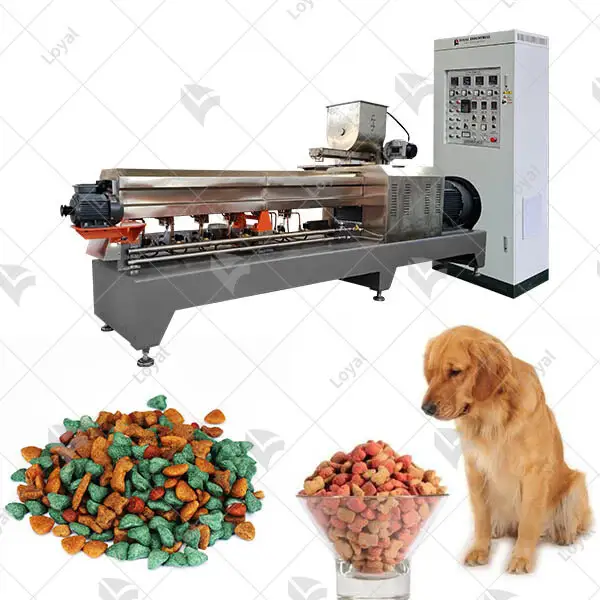
twin-screw extruders are the heart of pet and animal food/fish feed production lines. Twin-screw extruders cook and shape raw mixtures into kibble or pellets under controlled temperature and pressure. For pet food, extrusion enhances digestibility by gelatinizing starches, while in fish feed process lines, adjustable die plates create floating or sinking pellets tailored to aquatic species. Modern extruders also integrate moisture sensors to optimize texture and reduce post-processing drying time.
Drying and Cooling Units
Post-extrusion, energy-efficient dryers remove excess moisture to extend shelf life. In fish feed process lines, horizontal belt dryers with adjustable airflow prevent overheating, preserving heat-sensitive nutrients. Cooling towers then stabilize product temperature before packaging, minimizing condensation-related spoilage. Some systems recover waste heat for reuse, cutting energy costs by 20–30% in pet and animal food process lines.
Packaging Automation
The final stage employs robotic arms and multi-head weighers to fill bags, cans, or bulk containers. Smart packaging machines in pet and animal food/fish feed production lines detect variations in product density, ensuring accurate portioning (±1% tolerance). For fish feed, nitrogen-flushed packaging preserves pellet freshness during transport. These systems handle diverse formats—from 5g treat pouches to 25kg aquaculture sacks—without manual reconfiguration.
Technical Parameters Of Dog Food Pellet Making Machine
Technical Parameters Of Dog Food Pellet Making Machine | |||||
Equipment Of Line | LY- 85 | LY-95 | LY-56 | LY-70 | LY-80 |
Installed Power | 90kw | 145kw | 66.84 Kw | 97.65 Kw | 146.65 Kw |
Power Consumption | 55kw | 80kw | 47.84 Kw | 76.65 Kw | 97.05 Kw |
Production Capacity | 500-800kg/H | 800-1200kg/H | 100-150 Kg/H | 200-300 Kg/H | 300-550 Kg/H |
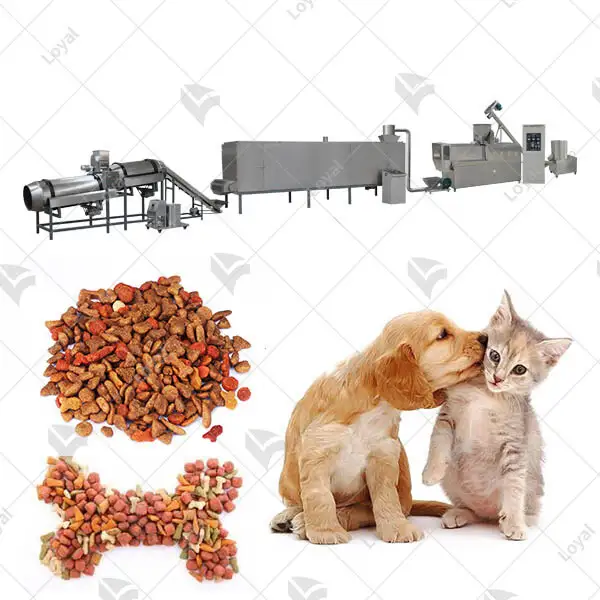
Pet Food Manufacturing Process Flow Chart |
Mixer → Screw Conveyor → Twin-Screw Extruder → Hoist → Dryer → Cooler → Hoist → Seasoning System → Cooling Conveyor→Packaging Machine |
Advantages of Optimized Pet Food Production Lines
Optimizing pet and animal food process lines delivers tangible benefits across productivity, quality impact, positioning manufacturers as leaders in a competitive market.
1. Enhanced Productivity
By integrating IoT sensors and real-time analytics, modern pet and animal food/fish feed production lines minimize unplanned downtime. For instance, vibration monitors on extruders predict mechanical failures days in advance, allowing proactive maintenance. Automated fish feed process lines can achieve up to 95% operational uptime, compared to 75–80% in traditional setups. This efficiency translates to faster order fulfillment and scalability to meet seasonal demand spikes.
2. Quality Consistency
Precision-controlled pet and animal food process lines eliminate batch variations. Extruders with AI-driven temperature regulation ensure uniform cooking of pet kibble, locking in nutrients like taurine for cats or glucosamine for dogs. In fish feed process lines, moisture sensors in drying units maintain pellet integrity, preventing cracks that compromise nutritional value. Rigorous quality checks at each stage guarantee compliance standards.
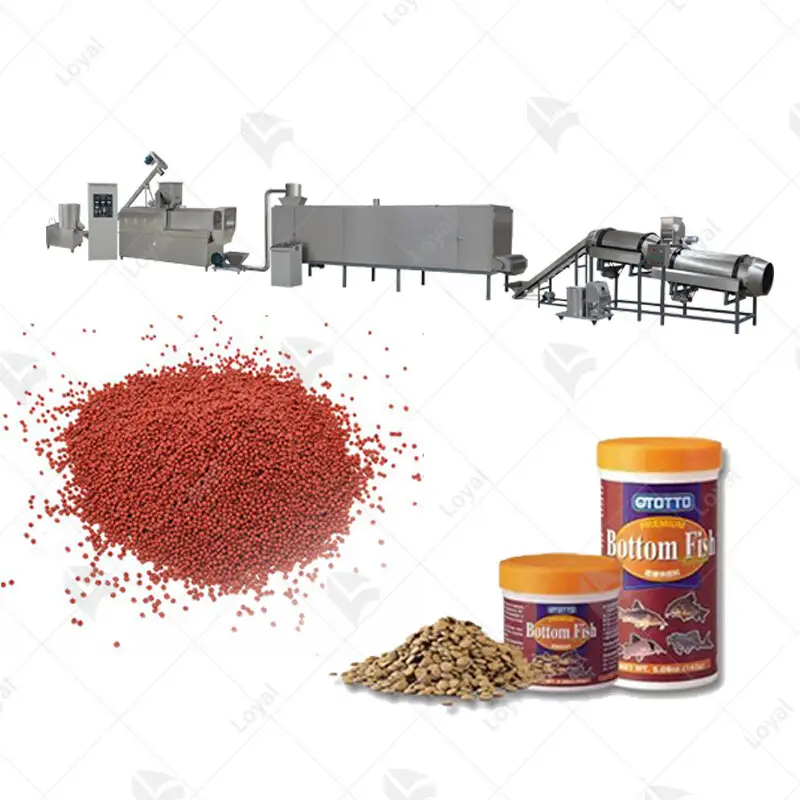
The basic composition of the Dog treat manufacturing equipment
1. Mixer: Mix the used corn flour, wheat flour, soybean meal, rice bran, wheat bran, fish meal, bone meal, and other raw materials evenly.
2. Screw conveyor: the raw materials are conveyed to the twin-screw extruder in the form of conveying at various angles.
3. Twin-screw extruder: Extrude and expand the raw materials, change the production process, change the mold, and process and produce various shapes of dog food, such as round, heart-shaped, and bone-shaped.
4. Air conveyor: transport the prepared dog food to the dryer.
5. Dryer: High-temperature drying quickly removes excess water and prolongs the shelf life of dog food.
6. Air conveyor: convey the dried dog food to the seasoning line.
7. Seasoning line: modulate dog food into different flavors, such as chicken flavor, beef flavor, etc., to make the palatability of dog food better.
8. Cooling line: Quickly cool dog food to prevent it from being damp and soft when packaged at high temperatures.
9. Packing machine: packing dog food.
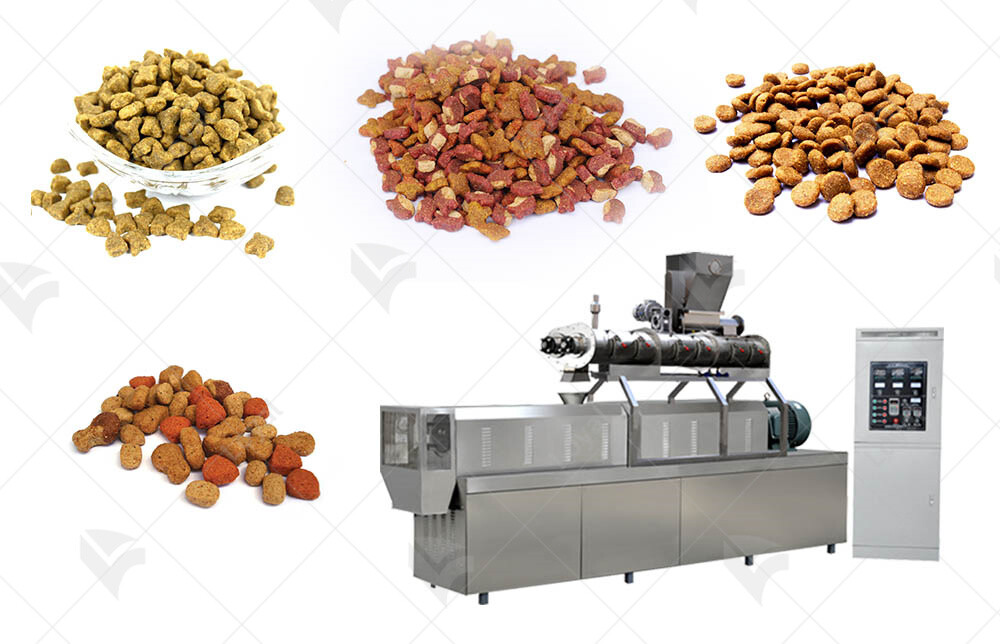
What Is The Function Of Pet Feed?
Pet food mainly refers to dog food (dog food), cat food, ornamental fish feed, pet turtle feed, and their own pet feed.
The main composition of dog food is corn, wheat or rice, meat meal, bone meal or calcium dihydrogen phosphate, choline chloride, wheat bran, puffed or fermented soybean meal, fish meal, etc. Trace elements, minerals.
The size of dog food particles is divided into adult dogs and puppies. Adult dogs are generally about twice the size of puppy food pellets.
Dogs are animals with a good sense of smell, their taste and vision are not developed, the dog's eyes are black and white, so no matter how bright the color of the dog food, the dog can't feel it.
So the seasoning for dogs is actually the addition of food attractants.
There are two main components of the food attractant, chicken liver. The production process is simple, that is, ground chicken, grind it with colloid, add chicken oil, and then grind it, plus preservatives and so on.
Nervous food attractants, once a dog eats it, it is like taking drugs, it will become dependent after eating, and will never eat other things.
The composition of cat food is similar to that of dog food, except that the proportion of powder should be slightly larger.
In addition, 1-2% acid borogol should be added to the formula, mainly because the cat's eyes will be particularly bright, and the attractant is mostly powder.
The cat food seasoning equipment is similar to that of dog food, while cats use single-drum seasoning machines.
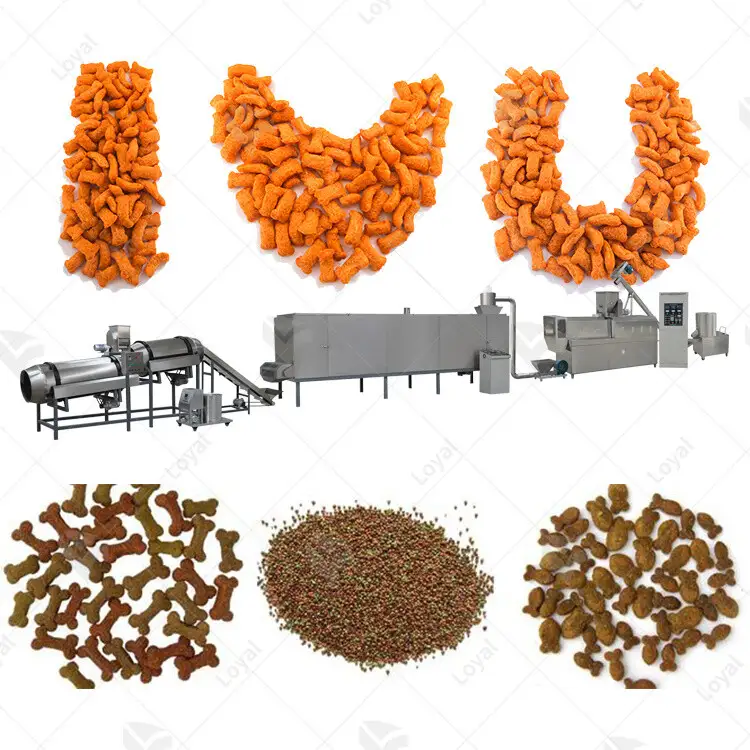
Features of low temperature dryer for pet food production line
1. Fully insulated box, hot circulating air, high thermal efficiency and low energy consumption
2. There are single-layer, three-layer, five-layer and seven-layer ovens for pet food ovens to choose from
3. The pet food craft oven has various structures such as extension type and reciprocating type for your choice
4. Various heating methods: electricity, steam, fuel/gas, biomass burner
Maintenance work of dog food production line
1. Troubleshooting: If the equipment fails, it must be solved immediately. The equipment must be shut down first to ensure the safety of the workers on the production line. Many small faults are caused by the accumulation of time, and all problems should be solved immediately.
2. Dust cleaning: As we all know, the Doritos production equipment in the factory has always been continuous work, so long-term use of the candy production equipment will definitely leave a lot of dust. If the dust is not cleaned up in time and continues to work, in addition to food safety, A particular impact will also affect the operation of the entire equipment. There are also significant problems with the heat dissipation of the motor. Dust blocks the heat dissipation holes and allows the motor to continue processing at high temperatures, which has a serious impact on the service life of the motor. It is critical to carry out necessary maintenance work. Remove all the dust on the outer layer of the device and let the engine. Even if the operating temperature is released, continuous processing will not affect the motor.
- Accessories lubrication: The internal components of the equipment play an important role in the performance of the whole machine, but under continuous processing, the wear effect of the accessories is intensified, and necessary lubrication is needed. It can not only alleviate the degree of wear of the accessories but also play a particular protective role. , Extend the service life of the equipment.
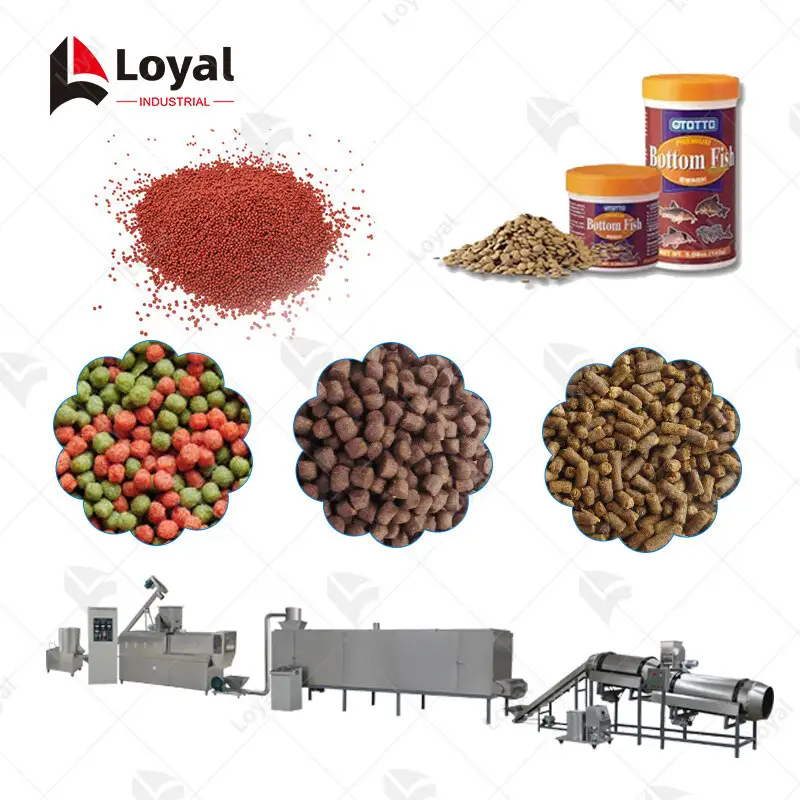
How Important is Dog Food?
Dog food has a very positive effect on the health of dogs. Dog food on the market is mainly divided into two categories, one is commercial food and the other is natural food. Commercial foods have added some additives, which have better palatability, and dogs like to eat more. Natural foods do not have any additives and the raw materials are also very healthy.
With the increase in the number of pet owners, the pet food industry has also become hot. Pet snacks, pet nutrition, dog food, and cat food have become the most profitable products in the pet industry. Nowadays, competition in the pet food industry is very fierce. Only by using equipment with outstanding performance can we win market recognition with high-quality products.
The advantages of the pet food production line are very obvious
1. It is made of food grade stainless steel, with stable and reliable quality and long service life.
2. The degree of automation is high, and the fully automated production method has a very high production efficiency, which can provide manufacturers with a very high output.
3. The structure of the production line is compact, and the floor space is small, and it can be easily used in small and medium workshops.
4. With automatic lubrication system, it can effectively protect the accessories and prolong the use time.
5. It can process and produce various types of pet food, which has a wide range of uses.
Frequently Asked Questions
Q: Can the Pet Food Production Line handle different types of ingredients?
A: Yes, these production lines are designed to work with a wide range of ingredients, from various meats and grains to vegetables and supplements, allowing for the creation of numerous pet food formulas.
Q: How does the production line ensure the pet food meets nutritional standards?
A: The production line includes precise ingredient handling and mixing capabilities, ensuring that each formula meets specific nutritional requirements. Continuous monitoring and quality control checks during production guarantee that the final product adheres to set nutritional standards.
Q: Is it possible to adjust the production line for different pet food shapes and sizes?
A: Absolutely. The production line features interchangeable dies and cutting tools, making it possible to produce pet food in various shapes and sizes, from small kibbles to large chunks, catering to different pet preferences and dietary needs.
Q: What kind of maintenance is required for the Pet Food Production Line?
A: Regular maintenance includes cleaning, inspection, and lubrication of machinery components. Manufacturers provide detailed maintenance schedules and guidelines to ensure optimal performance and durability of the production line.
Q: Can the production line produce grain-free or organic pet food?
A: Yes, by utilizing the appropriate ingredients, the production line can produce grain-free, organic, or any specialized type of pet food, aligning with market demands and dietary trends.
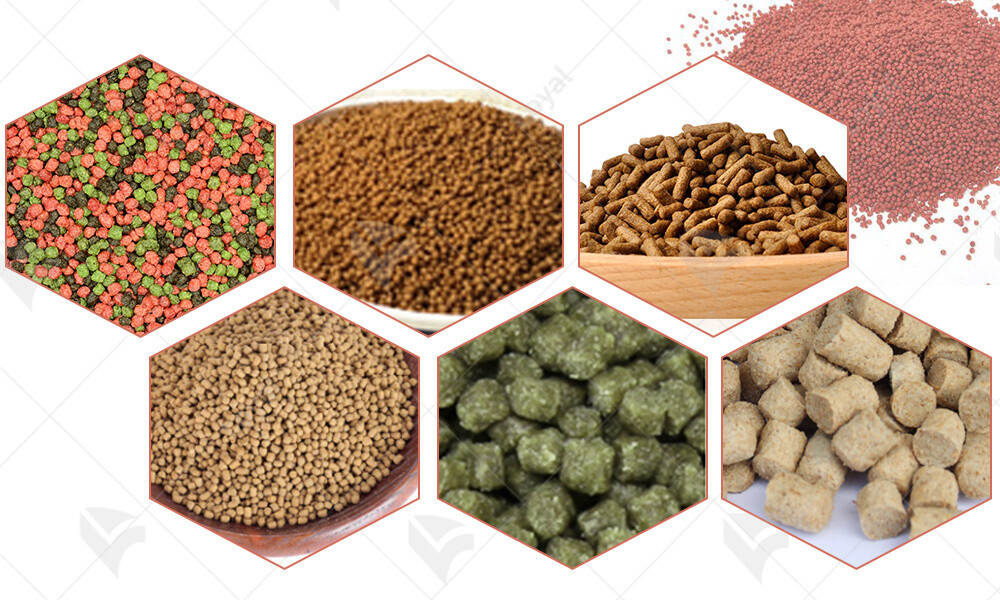
Shapes of pet feed and fish feed
• Granule type: spherical (microgranules for ornamental fish), formed by extrusion through a die.
• Flakes: flakes are suitable for small fish or turtles, softened by water.
• Blocks: compressed into bricks, used for long-term feeding in aquaculture.
• Special-shaped designs: bone-shaped dog food, star-shaped cat food, to increase pets' interest in eating.