



Unlock The Secrets Of EfficientCat Litter Microwave Sterilizing MachineManufacturing
If you want to know more story about LOYAL brand, here can help you - https://www.facebook.com/foodmachineloyal
Introduction to Cat Litter Microwave Sterilizing Machines
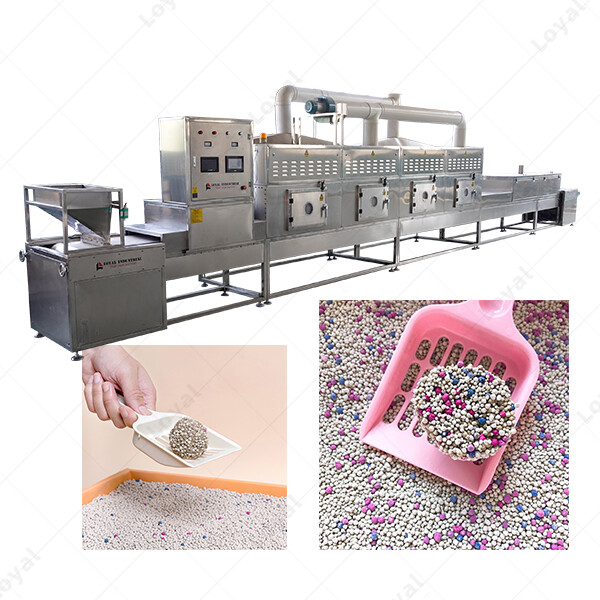
As industries continue to evolve and technologies advance, the demand for efficient and effective sterilization solutions has become more critical. One such innovation gaining prominence in both the pet care and sanitation sectors is the Cat Litter Microwave Sterilizing Machine. This high-tech machine is engineered to provide a quick and efficient method for sterilizing cat litter, ensuring a cleaner and safer environment for both pets and their owners.
The importance of maintaining hygienic conditions in cat litter cannot be overstated. Contaminated cat litter can harbor harmful bacteria, viruses, and parasites, leading to various health issues for both cats and humans. Traditional methods of sanitizing cat litter, such as manual cleaning or relying on chemical disinfectants, are often time-consuming and less effective in eliminating pathogens. This is where the Cat Litter Microwave Sterilizing Machine offers a more reliable solution.
By utilizing microwave technology, these machines can rapidly disinfect used cat litter, eliminating harmful microorganisms without the need for harsh chemicals or excessive heat. As more pet owners and pet care facilities adopt this technology, it is becoming evident that microwave sterilization is not only more effective but also more environmentally friendly compared to conventional methods.
The Technology Behind Cat Litter Microwave Sterilizing Machines
The Cat Litter Microwave Sterilizing Machine represents a cutting-edge technological solution designed to address the growing need for efficient sterilization in the pet care industry. Unlike traditional sterilization techniques that often rely on heat or chemicals, this machine utilizes microwave radiation to provide a precise, rapid, and highly effective sterilization process for cat litter. Let’s dive into the core technology that powers these machines and explore why this method is gaining significant attention in both the pet care and hygiene industries.
1.Microwave Sterilization Technology
At its core, the Cat Litter Microwave Sterilizing Machine leverages the same principles of microwave radiation that are commonly used in food processing, drying, and sterilization systems. Microwaves are a type of electromagnetic wave that can penetrate materials, causing water molecules to vibrate rapidly. This rapid vibration generates heat, which in turn heats the surrounding material. When applied to cat litter, microwaves effectively target the moisture and organic compounds in the litter, disrupting the cellular structure of harmful pathogens such as bacteria, fungi, and viruses.
Unlike traditional thermal sterilization methods, which often require the entire mass of litter to be heated to high temperatures for extended periods, microwave sterilization can penetrate deeper into the litter material without the need for excessive heat. This allows for faster processing times and ensures that the sterilization process is uniform across the entire batch of litter.
2.Key Features of Microwave Technology in Sterilization
High Penetration Efficiency | Microwaves can penetrate deeply into the cat litter, ensuring that the sterilization process is effective even for the densest clumps of used litter. This penetration efficiency reduces the need for prolonged exposure to high temperatures, making the process both faster and more energy-efficient. |
Uniform Sterilization | The microwave energy heats the litter in a uniform manner, ensuring that harmful bacteria, viruses, and parasites are effectively neutralized across the entire batch. The rapid, uniform heating reduces the risk of cold spots where pathogens could potentially survive. |
Energy Efficiency | Microwave energy is absorbed by the moisture within the litter, which allows for a more focused use of energy. This direct heating process is more energy-efficient compared to conventional methods that rely on heating entire environments, such as air or water, to sterilize the material. |
Environmentally Friendly | Since microwave sterilization does not rely on chemicals or excessive water usage, it offers a more sustainable and eco-friendly solution compared to other sterilization methods. The reduction in water and chemical waste is increasingly important in a world that prioritizes environmental sustainability. |
3.Integration with Automation
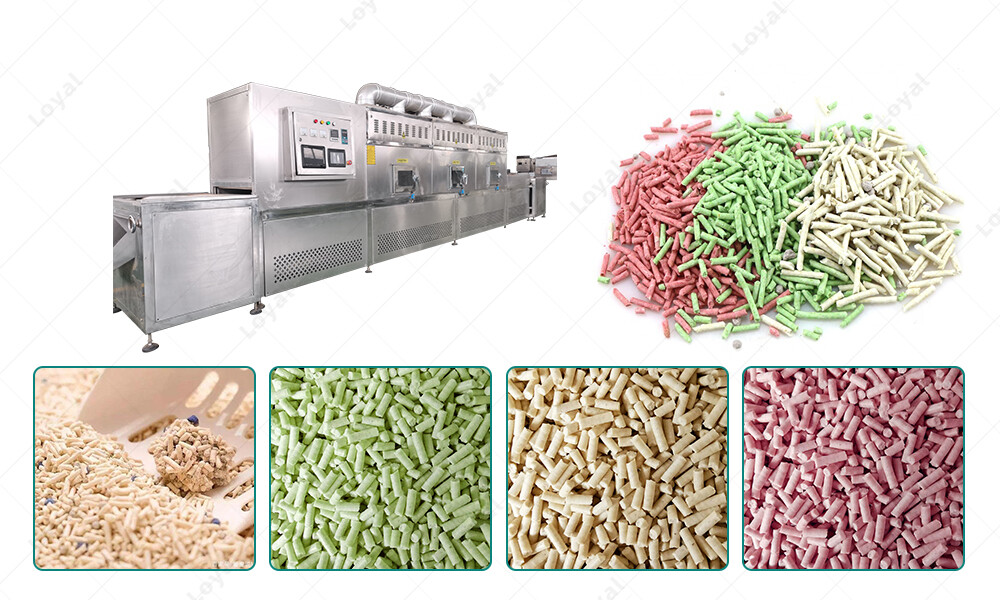
Modern Cat Litter Microwave Sterilizing Machines also integrate advanced automation and monitoring systems. These systems are capable of controlling and adjusting key variables such as temperature, moisture levels, and sterilization time. By continuously monitoring these factors, the machine can adapt to varying litter compositions, ensuring that the sterilization process remains highly effective and consistent across different batches of litter.
This automation not only increases efficiency but also reduces the risk of human error, ensuring that the process is safe and reliable. Additionally, automation allows for greater scalability, making the Cat Litter Microwave Sterilizing Machine a viable solution for both small-scale pet owners and large-scale pet care facilities.
Key Factors in Efficient Production of Cat Litter Microwave Sterilizing Machines
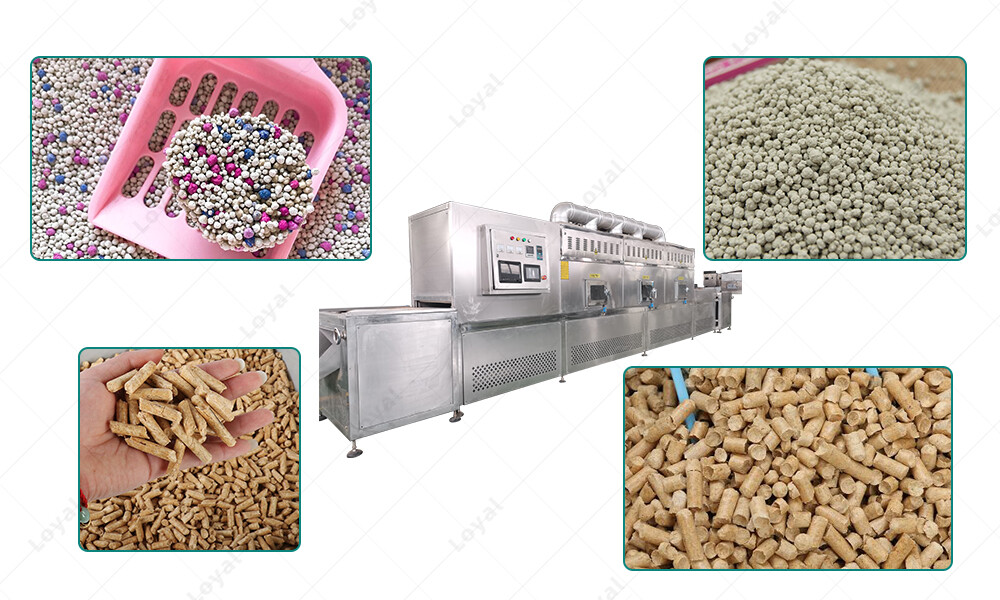
The production of Cat Litter Microwave Sterilizing Machines involves a meticulous balance of engineering, technology, and material science. For manufacturers to create highly effective, durable, and reliable sterilizing machines, several critical factors must be taken into consideration. These factors not only influence the performance of the machines but also their scalability, energy efficiency, and cost-effectiveness. Below are the key elements that contribute to the efficient production of these specialized machines.
1.Microwave Technology Integration
At the heart of every Cat Litter Microwave Sterilizing Machine lies its microwave generation system. The efficiency of the machine is largely determined by the power and frequency of the microwave energy it emits. To ensure that the sterilization process is both thorough and energy-efficient, manufacturers must carefully select and integrate high-quality magnetrons or microwave generators. The performance of these components directly impacts the machine’s ability to penetrate the litter effectively, ensuring rapid and even sterilization.
An effective design will focus on ensuring that microwave energy is uniformly distributed throughout the sterilizing chamber. Achieving uniform energy distribution is essential to eliminate cold spots where bacteria or pathogens might survive. This involves optimizing waveguide systems and microwave field patterns within the sterilizing chamber, which requires advanced knowledge of electromagnetic theory and precision engineering.
2.Material Selection for Durability and Safety
The materials used in the construction of the Cat Litter Microwave Sterilizing Machine play a critical role in its overall durability, safety, and efficiency. For the microwave chamber, materials that can withstand high temperatures, electromagnetic radiation, and frequent usage are essential. Stainless steel is commonly used due to its resistance to corrosion, high durability, and ease of cleaning, which is vital in a hygiene-sensitive environment like a cat litter sterilization process.
Moreover, the materials used in the internal components, such as microwave absorbing panels or shielding, must be of high quality to prevent microwave leakage. Proper shielding ensures that the sterilizing chamber remains isolated and the electromagnetic radiation doesn’t leak into the surrounding environment, which could be hazardous for both operators and pets.
3.Energy Efficiency and Sustainability
Energy consumption is a significant concern in any industrial manufacturing process, including the production of Cat Litter Microwave Sterilizing Machines. As such, manufacturers must prioritize energy efficiency by optimizing the microwave technology to consume less power while maintaining high sterilization performance. This can be achieved by using energy-efficient magnetrons, incorporating heat recovery systems, and ensuring that the microwave chamber operates at peak efficiency without wasting energy on unnecessary heating or radiation.
Sustainability is also a growing concern. In an era where environmental responsibility is increasingly valued, manufacturers are under pressure to minimize the ecological footprint of their machines. This involves not only reducing energy consumption but also optimizing materials for recyclability and reducing waste generated during the production process. Additionally, minimizing the use of chemical cleaners or disinfectants in the sterilization process aligns with the global push for more sustainable, chemical-free solutions.
4.Automation and Control Systems
Another critical factor in the efficient production of Cat Litter Microwave Sterilizing Machines is the incorporation of advanced automation and control systems. These systems allow for precise control over the sterilization process, ensuring that variables such as microwave power, exposure time, and temperature are carefully monitored and adjusted in real-time. Automation enables machines to run continuously without human intervention, making the process more efficient and cost-effective for both small and large-scale operations.
Manufacturers must ensure that the control systems are intuitive, user-friendly, and robust, capable of performing under varied conditions. These systems are often equipped with sensors and feedback loops that continuously monitor the machine’s performance, allowing for adjustments based on real-time data to ensure optimal results. This level of automation not only enhances productivity but also ensures the consistency and quality of the sterilization process.
5.Cost-Effectiveness and Scalability
The cost of manufacturing Cat Litter Microwave Sterilizing Machines is another crucial consideration. Manufacturers need to strike a balance between advanced technology and cost-effectiveness. This includes sourcing cost-effective components, optimizing production processes, and minimizing operational costs. At the same time, the final product must remain competitive in the marketplace while offering superior sterilization capabilities compared to other sterilization methods.
Technical Parameters Of Continuous Microwave Dryer Industrial Microwave Drying Machine | |||||
| Model | Size LWH(Can be customized according to the customer's requirements) | Output power | Dewaterability | Sterilization capacity | Baking and Roasting capacity (Depends on different raw material) |
| LY-10KW | 5000mm825mm1750mm | ≥10KW | 10KG/Hour | 100KG/Hour | 30-50KG/Hour |
| LY-20KW | 8000mm825mm1750mm | ≥20KW | 20KG/Hour | 200KG/Hour | 60-100KG/Hour |
| LY-30KW | 8500mm1160mm1750mm | ≥30KW | 30KG/Hour | 300KG/Hour | 90-150 KG/Hour |
| LY-40KW | 10000mm1160mm1750mm | ≥40KW | 40KG/Hour | 40KG/Hour | 120-200KG/Hour |
| LY-50KW | 12500mm1160mm1750mm | ≥50KW | 50KG/Hour | 500KG/Hour | 150-250KG/Hour |
| LY-60KW | 13500mm1450mm1750mm | ≥60KW | 60KG/Hour | 600KG/Hour | 180-300KG/Hour |
| LY-70KW | 13500mm1500mm1750mm | ≥70KW | 70KG/Hour | 700KG/Hour | 210-350KG/Hour |
| LY-80KW | 13500mm1650mm1750mm | ≥80KW | 80KG/Hour | 800KG/Hour | 240-400KG/Hour |
| LY-100KW | 16800mm1650mm1750mm | ≥100KW | 100KG/Hour | 1000KG/Hour | 300-500KG/Hour |
| LY-150KW | 22400mm1850mm1750mm | ≥150KW | 150KG/Hour | 1500KG/Hour | 450-750KG/Hour |
| LY-200KW | 27000mm1850mm1750mm | ≥250KW | 250KG/Hour | 2500KG/Hour | 750-1250/Hour |
| LY-300KW | 32000mm1850mm1750mm | ≥300KW | 300KG/Hour | 3000KG/Hour | 900-1500KG/Hour |
Power Supply | 380V±10% 50Hz±1% Three-Phase Five-Wire | ||||
Microwave Output Frequency | 2450±50Mhz | ||||
Microwave Input Apparent Power | ≤168Kva | ||||
Microwave Output Power | ≥120Kw | ||||
Microwave Power Adjustment Range | 0-30Kw(Adjustable) | ||||
Ambient Temperature | -5-40°C | ||||
Relative Humidity | ≤80%, Surrounding Environment:No Corrosive Gas, Conductive Dust And Explosive Gas | ||||
Transmission Speed | 0-10m/Min(Adjustable) | ||||
Recommended Company
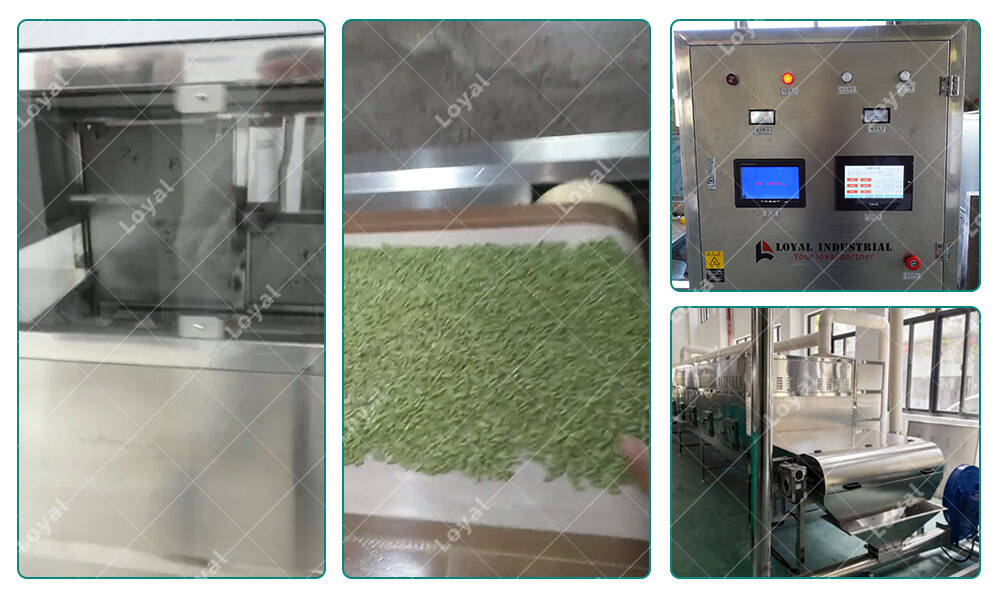
Shandong Loyal Industrial Co.,Ltd. Is a Manufacturer Of Snacks Extruder Machine , Industrial Microwave Oven , Corn Flakes Production Line , And a Standing Director Of China Food And Drying Equipment Industry Association.
The Self-developed Twin-screw Extruder And Single-screw Equipment of Shandong Loyal Machinery Have Been Used In Production: Puffed Snack Food, Breakfast Cereal Corn Flakes, Fried Pasta, Bread Crumbs, Fruit Chips, Baby Food, Textured Soy Protein (tsp) Food, Fish Feed And Pet Food. a Variety of Snack Production Line Supporting Products.at The Same Time, The Batching, Drying, Flaking, Baking, Frying And Spraying Equipment Matching The Twin-screw Extrusion System Have All Achieved Independent Design And Production.
Our Extrusion System Is Widely Used In: Puffed Snack Foods, Breakfast Cereals, Vegetable Protein Meat Products, Nutrition Bars, FortifiedRice, Grain Nutrition Powder, Modified Starch, Bread Crumbs And Other Food Additives, Pet Food, Aquatic Feed, Biology And Chemical Industries.
Customer-specific Food Processing Plant Project Solutions
As one of the leading manufacturers of food processing equipment, we are always searching for new solutions that benefit our snack food customers. Our experienced frying engineers always find the optimal solution for your industrial batch and continuous frying system line application. That's why we also develop, design and produce custom fried snack production line.
Close collaboration with our customer is important to us even in the early development phase. No matter what the special requirements of instant noodles production line, snack food extruder machine, pasta production line application, we can develop a custom made food processing equipment to match your needs.
Loyal have a unique and efficient industrial continuous frying equipment for snack food extruder machine that provides the right crunch and desired moisture level.
In ovens or drying units, electric or gas can be used as heating sources.
The Industrial Microwave Sterilization Defrosting Drying Machine can be designed as a dry powder dosing system and a wet slurry dosing system as required.
Some snacks can also be fried according to taste requirements, and we also provide Fried Snack Production Line for the processing and packaging of fried extruded snacks.
About packaging and after-sales service
Packing: Plastic Film Suitable For Ocean Carriage
Technical Support: The customer can inform machine related problems to us via telephone, email or fax. All information will be recorded and will be reported to the After-sale Service team. Meanwhile, the sales person will be tracking the case until problem solved.
Service Team:We have a professional After-sale Service team including10 professional engineers with at least 6 years working experience. They can handle technical consultation about manufacturing process, maintenance, fault diagnosis and troubleshooting, etc.
After-sale Service available :1.Check & test before delivery 2.Instruction for installation 3.On site commissioning 4.Repair & maintenance
After the receipt the advanced payment, we will provide allocation chart at the buyer’s request. When effect the shipment, we’ll provide operation manual, etc. in English.
Reference
The following are five authoritative foreign literature websites in the field of Industrial food machinery:
1. Food Engineering Magazine
Website: https://www.foodengineeringmag.com/
2.Food Processing Magazine
Website: https://www.foodprocessing.com/
3.Journal of Food Engineering
Website:https://www.journals.elsevier.com/journal-of-food-engineering
4. Food Manufacturing Magazine
Website:https://www.foodmanufacturing.com/
5. International Journal of Food Science & Technology
Website:https://onlinelibrary.wiley.com/