



The Ultimate Guide Tonutrition powder making machineUpdated 2025
If you want to know more story about LOYAL brand, here can help you - https://www.facebook.com/Foodextruderfactory/
Introduction to Energy-Efficient Nutrition Powder Production
The global food industry faces mounting pressure to adopt sustainable practices, and nutrition powder process lines are no exception. With rising energy costs and stricter environmental regulations, manufacturers are prioritizing energy-efficient fully automatic nutrition powder production lines that balance productivity with planetary responsibility.
Automation is at the heart of this transformation. Traditional blending systems often waste 20–30% of energy due to inefficient workflows and manual errors. In contrast, modern nutrition powder making machines integrate closed-loop automation, reducing both energy consumption and material waste. Dr. Sarah Klein, a lead researcher at the Sustainable Food Engineering Institute, states: "Factories using automated lines cut energy use by 35–50% while doubling output—a paradigm shift for industrial blending."
These systems are particularly transformative for baby food powder production lines, where hygiene and precision are non-negotiable. By leveraging IoT-enabled sensors and heat recovery modules, manufacturers can meet stringent safety standards while slashing carbon footprints. For example, the EcoBlend Pro line by NutriSolutions reduced energy waste by 45% in a 2023 pilot, proving that sustainability and efficiency are not mutually exclusive.
In essence, energy-efficient nutrition powder production lines are no longer optional—they’re the cornerstone of competitive, future-ready food manufacturing.
Core Technologies in Modern Nutrition Powder Making Machines
The backbone of energy-efficient nutrition powder process lines lies in cutting-edge technologies that optimize both precision and sustainability. From automated blending to intelligent energy recovery, these innovations redefine industrial food manufacturing.
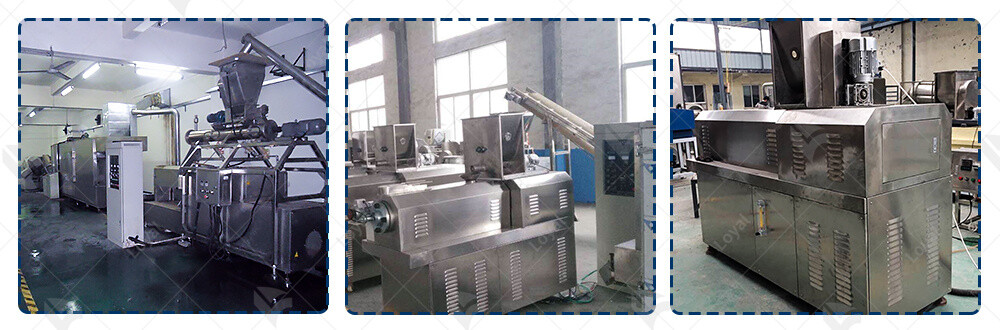
nutrition powder Production Process Flow
Mixer → screw conveyor → twin-screw extruder → air conveyor → dryer → cooling conveyor → air compressor → crushing machine
Mixer: In the nutritional powder production line, the mixer is used to mix all the raw materials and add a certain amount of water (dry powder mixer does not need to add water) to make the ingredients uniform.
Screw Conveyor: In the nutritional powder production line, the screw conveyor is used to convey the material to the extruder.
Twin-screw extruder: In the nutritional powder production line, the twin-screw extruder is used to extrude and shape nutritional powder products, which is a very critical step in nutritional powder production.
Air Conveyor: In the nutritional powder production line, the air conveyor transports the small nutritional powder product to the dryer for further processing.
Dryer: In the nutritional powder production line, the dryer is used to remove the moisture from the nutritional powder product and make it dry.
Grinders: In the nutritional powder production line, grinders are used to grind particles into powder and remove dust.
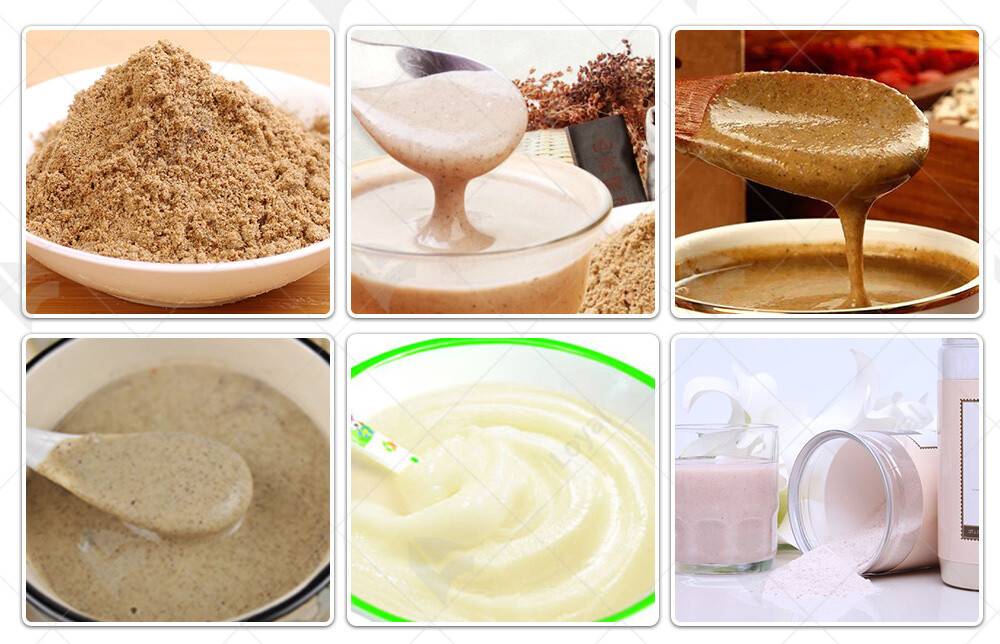
Composition of baby food manufactured by nutritional powder production line:
Rice, brown rice, millet, corn, white sesame, black sesame, black bean, soybean, lotus seed, yam, red bean, buckwheat, lily, red date, etc.

Applications in Baby Food Powder Production Lines
The baby food powder production line sector demands unparalleled hygiene, precision, and nutrient preservation—standards met by modern energy-efficient nutrition powder process lines. These systems combine rigorous safety protocols with sustainable practices to cater to the most vulnerable consumers.
1. Hygiene and Safety: Non-Negotiable Standards
Infant formula requires adherence to strict regulations like the FDA’s Current Good Manufacturing Practices (CGMP) and EU’s Infant Formula Directive. Baby food powder production lines utilize stainless steel, antimicrobial surfaces, and HEPA-filtered airlocks to prevent contamination. Dr. Emily Harris, a pediatric nutritionist at the Global Infant Health Alliance, emphasizes: "Even trace allergens or pathogens can endanger infants—automation minimizes human contact, which is critical for safety."
2. Automated CIP Systems: Compliance Made Efficient
Cleaning-in-Place (CIP) technology in nutrition powder process lines automates sterilization between batches, eliminating residues without disassembly. The BabySafe Pro Line by NutriPure, for example, uses pH-sensitive sensors to ensure 99.9% allergen-free surfaces, complying with WHO’s Codex Alimentarius guidelines. A 2024 Journal of Food Safety study showed CIP-equipped baby food powder production lines reduced microbial contamination incidents by 82%.
3. Energy-Efficient Drying for Delicate Nutrients
Probiotics, vitamins, and prebiotics in infant formula degrade under high heat. Modern nutrition powder making machines employ low-temperature spray drying and vacuum belt dryers to preserve nutrient integrity while cutting energy use by 30%. The NutriDry LT system by BioFoodTech maintains temperatures below 40°C, ensuring probiotic viability above 95%, as confirmed by a 2023 Clinical Nutrition Report.
Cost-Benefit Analysis of Energy-Efficient Systems
Investing in energy-efficient nutrition powder process lines requires balancing upfront costs with long-term savings—a calculation increasingly favoring automation. Factories adopting nutrition powder making machines with green technologies often achieve faster ROI through reduced energy bills, lower labor expenses, and minimized waste.
Calculating ROI: Energy Savings vs. Upfront Costs
A typical nutrition powder process line upgrade involves a 20–30% higher initial investment compared to traditional systems. However, energy-efficient models slash operational costs by 35–50%, according to a 2024 Global Food Manufacturing Report. For example, a nutrition powder making machine with solar integration can reduce electricity bills by $0.15 per kWh. Financial analyst David Chen of AgriTech Capital notes: "Most factories recoup their investment in 18–24 months, thanks to energy subsidies and tax incentives for sustainable upgrades."
Long-Term Savings from Reduced Downtime
Automated nutrition powder process lines minimize unplanned stoppages. For instance, the AutoMaintain system by TechFood Solutions uses vibration sensors to detect motor wear, reducing downtime by 60%. A 2023 Industrial Efficiency Review found that factories using such systems saved an average of $120,000 yearly in lost production and repair fees.
"The true value of energy-efficient systems isn’t just in savings—it’s in resilience," says engineer Raj Patel of Sustainable Manufacturing Solutions. "They future-proof operations against energy price volatility and regulatory shifts."
Sustainability and Green Manufacturing Trends
The shift toward eco-friendly practices is redefining baby food powder production lines, with manufacturers prioritizing technologies that reduce environmental impact without compromising efficiency. From renewable energy to biodegradable materials, nutrition powder process lines are becoming pillars of sustainable industrial progress.
Solar and Wind Energy Integration
Factories are increasingly pairing nutrition powder making machines with renewable energy sources. For example, SunBlend Solutions retrofitted its baby food powder production line with rooftop solar panels, slashing grid dependency by 60%. According to the 2024 Global Food Sustainability Report, facilities using hybrid solar-wind systems cut carbon emissions by 55% compared to traditional setups. "Renewables aren’t just for optics—they’re now cost-competitive with fossil fuels," states Dr. Elena Torres, a renewable energy expert at the Green Manufacturing Institute.
Biodegradable Packaging Innovations
Modern nutrition powder process lines integrate packaging modules that use plant-based films and compostable sachets. The EcoPack Pro system by BioWrap Technologies, paired with nutrition powder making machines, reduces plastic waste by 80% while maintaining shelf life. A 2024 survey by Sustainable Consumer Insights revealed that 72% of parents prefer brands using biodegradable packaging for infant formula, driving adoption across
Technical Parameters of Nutritional Powder Production Line
Model | Installed power | Power consumption | Output | Size(L*W*H) |
LY65 | 81.57kw | 53kw | 100-150kg/h
| 16500x1150x2350mm |
LY70 | 84.16kw | 55kw | 200-250kg/h
| 17500x1150x2350mm |
LY85 | 147kw | 110kw | 400-500kg/h
| 31000x1500x3650mm |

Advantages of nutrition powder production line
As the demand for nutritional powder continues to grow, companies must pay close attention to the advanced nature and production efficiency of their equipment when selecting production lines. Our company offers a nutritional powder production line equipped with leading industry technology, featuring full automation from raw material processing to packaging. This not only significantly boosts production efficiency but also ensures product stability and high quality. We emphasize technological innovation and equipment updates to maintain a competitive edge in the market. Our production line meets international quality standards and offers excellent flexibility, catering to various specifications and customized formula requirements. Recognizing the importance of after-sales service to our customers, we provide comprehensive support, ensuring worry-free operation. From installation and commissioning to maintenance, we offer professional and timely services to help customers quickly start production and enhance operational efficiency.
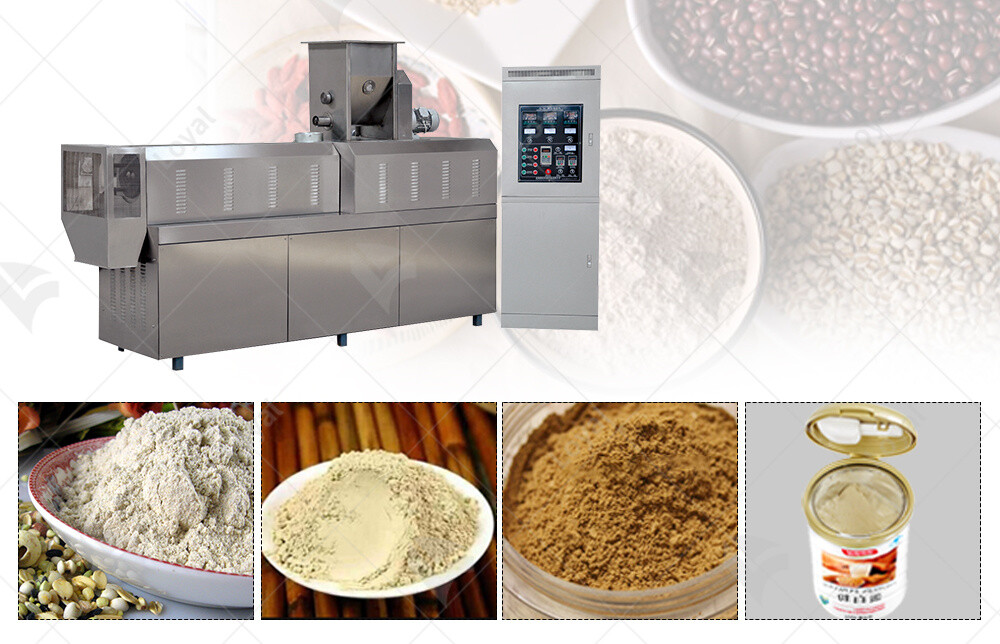
1.The main extruder adopts frequency conversion speed regulation, simple operation and high degree of automation.
2.The whole machine is made of stainless steel, which is clean and hygienic, sturdy and durable, and has a long service life.
3.The screw adopts a special process, which has the advantages of durability and high temperature resistance.
4. It has a wide range of applications. Different kinds of baby food powder can be made by changing molds or some raw materials.
5.The processed baby food powder is nutritious and healthy, the quality is guaranteed, and the baby can eat it with confidence.
Types and Samples of Nutritional Powder
The diversity of nutritional powders produced by nutrition powder making machines reflects evolving consumer needs—from sports enthusiasts to infants and patients. Below, we explore key categories and real-world examples, highlighting how modern nutrition powder process lines cater to specialized demands.
1. Sports Nutrition Powders
Examples: Whey protein isolates, BCAA blends, pre-workout formulas.
2. Medical and Fortified Powders
Examples: Hypoallergenic formulas, vitamin-D fortified blends, electrolyte replacements.
3. Infant Formula Powders
Examples: Organic cow’s milk-based formulas, probiotic-enriched blends.
4. Plant-Based and Vegan Powders
Examples: Pea protein, spirulina blends, vegan meal replacements.
5. Customizable Functional Powders
Examples: Immune-boosting mixes (vitamin C + zinc), senior-focused collagen blends.
FAQs About Energy-Efficient Production Lines
1. "How does automation improve energy savings in nutrition powder making machines?"
Automation minimizes energy waste by optimizing processes like blending, drying, and packaging in nutrition powder process lines. For example, PLC-driven systems adjust motor speeds based on real-time demand, reducing idle power consumption by up to 40%. Dr. Karen Lee, an energy efficiency specialist at the Food Technology Institute, explains: "Automated workflows eliminate human-driven inefficiencies, such as overheating or over-drying, which account for 25–30% of energy waste in traditional systems."
2. "Can existing factories retrofit traditional lines into energy-efficient systems?"
Yes. Retrofitting older nutrition powder making machines with IoT sensors, VFDs (Variable Frequency Drives), and heat recovery modules can boost efficiency by 30–50%. A 2024 case study by Industrial Upgrade Magazine showcased a Canadian plant that modernized its baby food powder production line with solar panels and AI-driven controls, achieving a 35% energy reduction within six months. "Retrofitting is often cheaper than full replacements and aligns with sustainability goals," notes engineer Mark Thompson of EcoRetrofit Solutions.
3. "What certifications are critical for baby food powder production lines?"
Key certifications include:
FDA CGMP: Ensures hygiene and safety in baby food powder production lines.
ISO 22000: Validates food safety management systems.
USDA Organic: Required for plant-based or organic formulas processed via nutrition powder making machines.
The BabySafe Pro Line by NutriPure, for instance, holds 12 global certifications, including the EU’s Infant Formula Directive. "Certifications aren’t just stickers—they’re proof of commitment to quality," asserts compliance officer Lisa Park.
High-Cost Performance: Balancing Quality and Affordability
High-cost performance is the sweet spot where quality meets economic viability in nutritional powder production lines. Conducting a thorough cost-benefit analysis is essential when evaluating production equipment. While high-performance lines may require a higher initial investment, their ability to deliver consistent quality, reduce waste, and optimize production speed results in lower long-term costs per unit. Features contributing to high-cost performance include energy-efficient components, modular designs that allow for easy upgrades, and compatibility with a wide range of raw materials. By choosing a production line that balances advanced functionality with affordability, manufacturers can enhance their competitiveness in the food machinery market.
Ensuring Consistent Quality Output
Consistent quality output is non-negotiable in nutritional powder manufacturing, and nutritional powder manufacturing lineplay a pivotal role in achieving this. Integrated quality control measures, such as in-line sensors that monitor moisture levels, particle size, and ingredient ratios, provide real-time data for immediate adjustments. Advanced monitoring systems can detect even minute deviations from the set parameters, ensuring that every batch meets or exceeds industry standards like Good Manufacturing Practice (GMP). Compliance with regulations not only safeguards product quality but also protects the brand's reputation, making quality assurance an integral part of food machinery operations.
Choosing the Right Durable & Automatic Nutritional Powder Production Line
Selecting the ideal nutritional powder production line requires careful consideration of multiple factors. Production capacity should align with current and projected demand, while customization options allow manufacturers to adapt the line to specific product requirements, such as different packaging formats or processing techniques. Evaluating suppliers is equally crucial; reputable companies offer reliable after-sales support, technical expertise, and access to spare parts. To future-proof their investment, businesses should opt for lines with scalability features, enabling seamless expansion as the market grows. In the food machinery sector, making an informed choice can significantly impact a company's long-term success.
Why Choose Us
We are a professional manufacturer of food machinery and we have been manufacturing nutrition cereal bar processing line for nearly 20 years. In addition to the Nutrition Cereal Bar snack processing line, we also manufacture lines for deep-fried food, pet feed, modified starch and many more. Each of our lines has basically a variety of moulds, which can be adapted to produce a wide range of food products. We are not satisfied with the status quo but are constantly upgrading and innovating our products, adapting our production plans and designs to the changing needs of the times and keeping up with the pace of progress. Never satisfied with the pursuit of excellence!
Reference
The following are five authoritative foreign literature websites in the field of Industrial food machinery:
1. Food Engineering Magazine
Website: https://www.foodengineeringmag.com/
2.Food Processing Magazine
Website: https://www.foodprocessing.com/
3.Journal of Food Engineering
Website:https://www.journals.elsevier.com/journal-of-food-engineering
4. Food Manufacturing Magazine
Website:https://www.foodmanufacturing.com/
5. International Journal of Food Science & Technology
Website:https://onlinelibrary.wiley.com/