



The Ultimate Guide ToMealworm microwave drying machinery Updated 2025
If you want to know more story about LOYAL brand, here can help you - https://www.facebook.com/foodmachineloyal
Introduction to Mealworm Microwave Drying Machinery
The growing interest in sustainable food sources has placed mealworms at the forefront of alternative protein production. Their versatility in various industries, including animal feed, human consumption, and even bioplastics, has made them an invaluable resource. However, the process of mealworm preservation, particularly drying, plays a crucial role in maintaining their nutritional value, taste, and usability.
Mealworm microwave drying machinery offers a cutting-edge solution for this critical step in mealworm processing. Unlike traditional drying methods, microwave technology utilizes electromagnetic waves to heat and dehydrate mealworms at an accelerated pace. This process preserves the integrity of the mealworms while ensuring that the final product retains its essential nutrients and qualities.
The adoption of microwave drying has seen a steady rise due to its numerous advantages over conventional techniques, such as air drying and freeze drying. This method ensures uniform heat distribution, which is vital for preventing uneven moisture content and preserving the overall quality of the mealworms. In the competitive landscape of food and feed production, the use of mealworm microwave drying machinery offers distinct benefits, including increased production speed, reduced energy consumption, and improved overall product quality.
As the food production industry continues to evolve, microwave drying technology is expected to play a pivotal role in scaling up mealworm processing. This guide will explore the science behind mealworm microwave drying machinery, its benefits, and how it aligns with industry trends, providing a comprehensive overview for businesses looking to adopt this innovative solution.
Understanding the Microwave Drying Process
Microwave drying technology has quickly become an essential tool in modern food processing, particularly when drying insects like mealworms. The primary advantage of mealworm microwave drying machinery lies in its ability to deliver consistent and efficient drying, preserving the quality and nutritional value of the mealworms throughout the process. Understanding how this technology works can help businesses make more informed decisions about its implementation and benefits.
1.How Microwave Drying Works: The Science Behind It
At the core of microwave drying is the principle of dielectric heating. When mealworm microwave drying machinery is in operation, electromagnetic waves at a frequency of 2.45 GHz interact with the water molecules inside the mealworms. These waves cause the water molecules to oscillate rapidly, generating heat within the mealworm’s body. As the water molecules move and vibrate, they produce friction, which causes the moisture to evaporate.
This method is distinct from traditional drying, where heat is applied externally and must penetrate the mealworm’s outer layers before reaching the moisture inside. In contrast, microwave drying allows for direct and uniform heating, enabling faster moisture evaporation from both the surface and the interior simultaneously. This ensures the mealworm’s structure remains intact, with less risk of cracking or degradation, which often occurs with other drying methods.
2.Key Advantages of Using Microwave Technology for Drying
One of the most compelling benefits of mealworm microwave drying machinery is its efficiency. Traditional drying methods, such as air drying or freeze-drying, tend to be slower and more energy-intensive. In comparison, microwave drying significantly reduces processing times. This increased speed directly translates to higher throughput, allowing for more mealworms to be processed in less time, which is essential for large-scale operations.
Another advantage of microwave drying is its ability to preserve the nutritional content of the mealworms. Since the process heats the mealworms from the inside out, it minimizes the exposure of the mealworms to prolonged high temperatures, thus reducing the likelihood of nutrient loss, especially in proteins, vitamins, and essential minerals. This results in a product that maintains higher nutritional integrity, making it ideal for both human and animal consumption.
3.The Efficiency and Speed of Microwave Drying for Mealworms
The speed and efficiency of mealworm microwave drying machinery make it an invaluable asset for high-volume processing. Microwave drying technology can dry mealworms in a fraction of the time required by traditional methods. In large-scale operations, where drying capacity is critical, the time savings offered by microwave dryers can lead to substantial increases in production capacity.
Moreover, the reduction in drying time helps to mitigate the risk of over-drying, a common issue with conventional methods. Over-drying can result in brittle, less nutritious mealworms that are unsuitable for certain applications. With mealworm microwave drying machinery, this risk is minimized, and the drying process is more precisely controlled, resulting in a consistently high-quality product.

Key Components of Mealworm Microwave Drying Machinery
The functionality and efficiency of mealworm microwave drying machinery depend on several key components, each designed to optimize the drying process and ensure the best possible results. These components work together to ensure even heat distribution, maintain product quality, and enhance energy efficiency. Understanding these components is crucial for operators and manufacturers looking to invest in or upgrade their microwave drying systems for mealworm processing.
1. Microwave Generator and Magnetron Functionality
At the heart of any mealworm microwave drying machinery is the microwave generator, which produces the electromagnetic waves that drive the drying process. The microwave generator typically consists of a magnetron, a vacuum tube that generates microwave radiation. The magnetron emits high-frequency waves that are directed into the drying chamber, where they interact with the water molecules in the mealworms.
The efficiency of the magnetron plays a vital role in the overall performance of the drying machine. A high-quality magnetron ensures consistent power output, which is crucial for achieving uniform drying results. Depending on the desired drying speed and scale of operation, the magnetron can be adjusted to suit the specific requirements of the production line.
2. Conveyor Belt and Tray Design for Optimal Heat Distribution
Another key component of mealworm microwave drying machinery is the conveyor belt, which moves mealworms through the drying chamber. The design of the conveyor belt, including its material, speed, and positioning, is essential for achieving consistent exposure to the microwaves. A well-designed conveyor system ensures that the mealworms are evenly spaced and receive uniform microwave energy, preventing over-drying or under-drying.
In some models, the trays or belts on which the mealworms rest are specifically engineered to facilitate optimal airflow and heat distribution. The tray material needs to be durable, heat-resistant, and able to maintain consistent contact with the mealworms to avoid any temperature fluctuations during the drying process.
3. Control Systems for Temperature and Moisture Regulation
Precision is paramount in the drying process, especially when dealing with sensitive products like mealworms. Mealworm microwave drying machinery is equipped with advanced control systems that regulate temperature and moisture levels within the chamber. These systems typically include sensors and software that monitor the internal environment and adjust the microwave power accordingly.
By automatically adjusting the microwave output based on real-time readings of the moisture content, these control systems ensure that mealworms are dried to the optimal level without being exposed to excessive heat. This helps preserve the mealworms’ nutritional value and prevents damage to their texture and appearance. Additionally, operators can manually fine-tune these settings for more specific requirements.
4. Safety Features of Modern Mealworm Drying Machines
Ensuring safety during the operation of mealworm microwave drying machinery is essential, both for the machine’s longevity and for the well-being of the operators. Modern microwave dryers are equipped with several built-in safety features to prevent accidents, including:
Interlock Systems | These systems ensure that the microwave chamber cannot be opened while the machinery is running, preventing exposure to microwave radiation. |
Overheat Protection | If the temperature exceeds preset limits, the system automatically shuts down or reduces microwave power to avoid overheating. |
Voltage Regulators | These components maintain stable power supply and prevent power surges from damaging the machinery. |
These safety mechanisms are designed to provide peace of mind for operators, ensuring that the mealworm microwave drying machinery is safe to use while maintaining high levels of productivity.
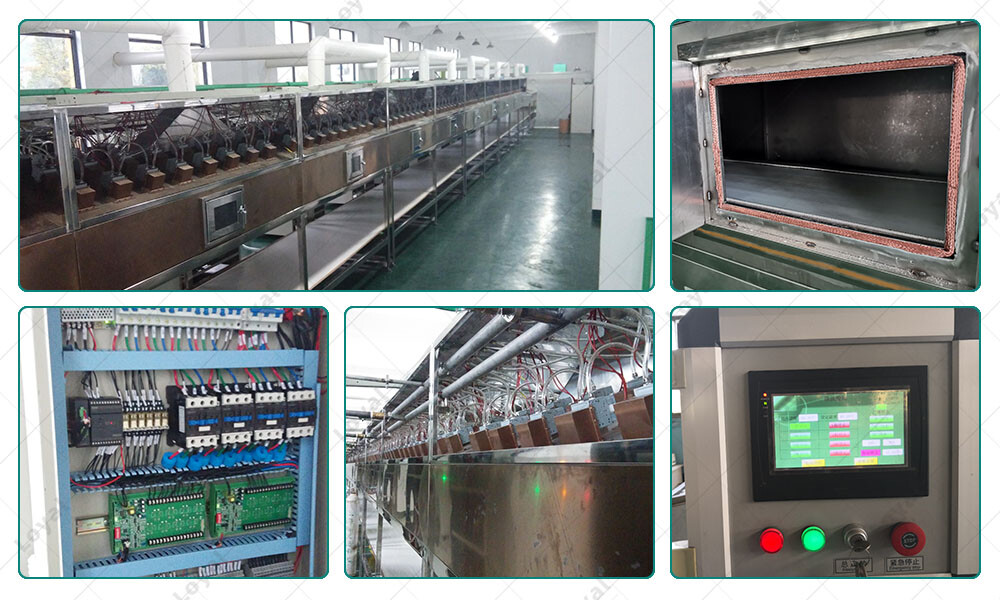
Technical Parameters Of Continuous Microwave Dryer Industrial Microwave Drying Machine | |||||
| Model | Size LWH(Can be customized according to the customer's requirements) | Output power | Dewaterability | Sterilization capacity | Baking and Roasting capacity (Depends on different raw material) |
| LY-10KW | 5000mm825mm1750mm | ≥10KW | 10KG/Hour | 100KG/Hour | 30-50KG/Hour |
| LY-20KW | 8000mm825mm1750mm | ≥20KW | 20KG/Hour | 200KG/Hour | 60-100KG/Hour |
| LY-30KW | 8500mm1160mm1750mm | ≥30KW | 30KG/Hour | 300KG/Hour | 90-150 KG/Hour |
| LY-40KW | 10000mm1160mm1750mm | ≥40KW | 40KG/Hour | 40KG/Hour | 120-200KG/Hour |
| LY-50KW | 12500mm1160mm1750mm | ≥50KW | 50KG/Hour | 500KG/Hour | 150-250KG/Hour |
| LY-60KW | 13500mm1450mm1750mm | ≥60KW | 60KG/Hour | 600KG/Hour | 180-300KG/Hour |
| LY-70KW | 13500mm1500mm1750mm | ≥70KW | 70KG/Hour | 700KG/Hour | 210-350KG/Hour |
| LY-80KW | 13500mm1650mm1750mm | ≥80KW | 80KG/Hour | 800KG/Hour | 240-400KG/Hour |
| LY-100KW | 16800mm1650mm1750mm | ≥100KW | 100KG/Hour | 1000KG/Hour | 300-500KG/Hour |
| LY-150KW | 22400mm1850mm1750mm | ≥150KW | 150KG/Hour | 1500KG/Hour | 450-750KG/Hour |
| LY-200KW | 27000mm1850mm1750mm | ≥250KW | 250KG/Hour | 2500KG/Hour | 750-1250/Hour |
| LY-300KW | 32000mm1850mm1750mm | ≥300KW | 300KG/Hour | 3000KG/Hour | 900-1500KG/Hour |
Power Supply | 380V±10% 50Hz±1% Three-Phase Five-Wire | ||||
Microwave Output Frequency | 2450±50Mhz | ||||
Microwave Input Apparent Power | ≤168Kva | ||||
Microwave Output Power | ≥120Kw | ||||
Microwave Power Adjustment Range | 0-30Kw(Adjustable) | ||||
Ambient Temperature | -5-40°C | ||||
Relative Humidity | ≤80%, Surrounding Environment:No Corrosive Gas, Conductive Dust And Explosive Gas | ||||
Transmission Speed | 0-10m/Min(Adjustable) | ||||
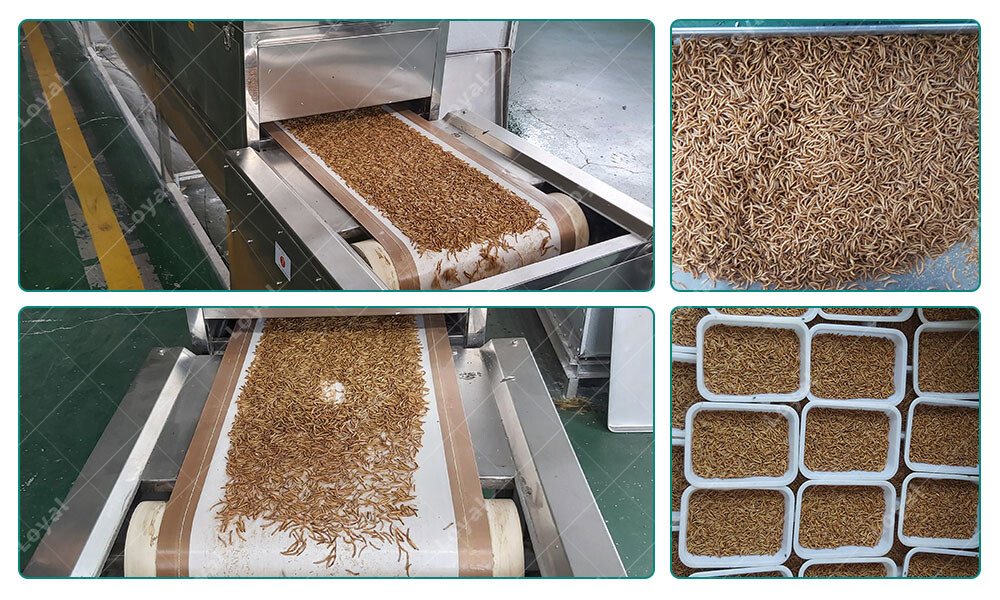
Recommended Company
Shandong Loyal Industrial Co.,Ltd. Is a Manufacturer Of Snacks Extruder Machine , Industrial Microwave Oven , Corn Flakes Production Line , And a Standing Director Of China Food And Drying Equipment Industry Association.
The Self-developed Twin-screw Extruder And Single-screw Equipment of Shandong Loyal Machinery Have Been Used In Production: Puffed Snack Food, Breakfast Cereal Corn Flakes, Fried Pasta, Bread Crumbs, Fruit Chips, Baby Food, Textured Soy Protein (tsp) Food, Fish Feed And Pet Food. a Variety of Snack Production Line Supporting Products.at The Same Time, The Batching, Drying, Flaking, Baking, Frying And Spraying Equipment Matching The Twin-screw Extrusion System Have All Achieved Independent Design And Production.
Our Extrusion System Is Widely Used In: Puffed Snack Foods, Breakfast Cereals, Vegetable Protein Meat Products, Nutrition Bars, FortifiedRice, Grain Nutrition Powder, Modified Starch, Bread Crumbs And Other Food Additives, Pet Food, Aquatic Feed, Biology And Chemical Industries.
Customer-specific Food Processing Plant Project Solutions
As one of the leading manufacturers of food processing equipment, we are always searching for new solutions that benefit our snack food customers. Our experienced frying engineers always find the optimal solution for your industrial batch and continuous frying system line application. That's why we also develop, design and produce custom fried snack production line.
Close collaboration with our customer is important to us even in the early development phase. No matter what the special requirements of instant noodles production line, snack food extruder machine, pasta production line application, we can develop a custom made food processing equipment to match your needs.
Loyal have a unique and efficient industrial continuous frying equipment for snack food extruder machine that provides the right crunch and desired moisture level.
In ovens or drying units, electric or gas can be used as heating sources.
The Industrial Microwave Sterilization Defrosting Drying Machine can be designed as a dry powder dosing system and a wet slurry dosing system as required.
Some snacks can also be fried according to taste requirements, and we also provide Fried Snack Production Line for the processing and packaging of fried extruded snacks.
About packaging and after-sales service
Packing: Plastic Film Suitable For Ocean Carriage
Technical Support: The customer can inform machine related problems to us via telephone, email or fax. All information will be recorded and will be reported to the After-sale Service team. Meanwhile, the sales person will be tracking the case until problem solved.
Service Team:We have a professional After-sale Service team including10 professional engineers with at least 6 years working experience. They can handle technical consultation about manufacturing process, maintenance, fault diagnosis and troubleshooting, etc.
After-sale Service available :1.Check & test before delivery 2.Instruction for installation 3.On site commissioning 4.Repair & maintenance
After the receipt the advanced payment, we will provide allocation chart at the buyer’s request. When effect the shipment, we’ll provide operation manual, etc. in English.
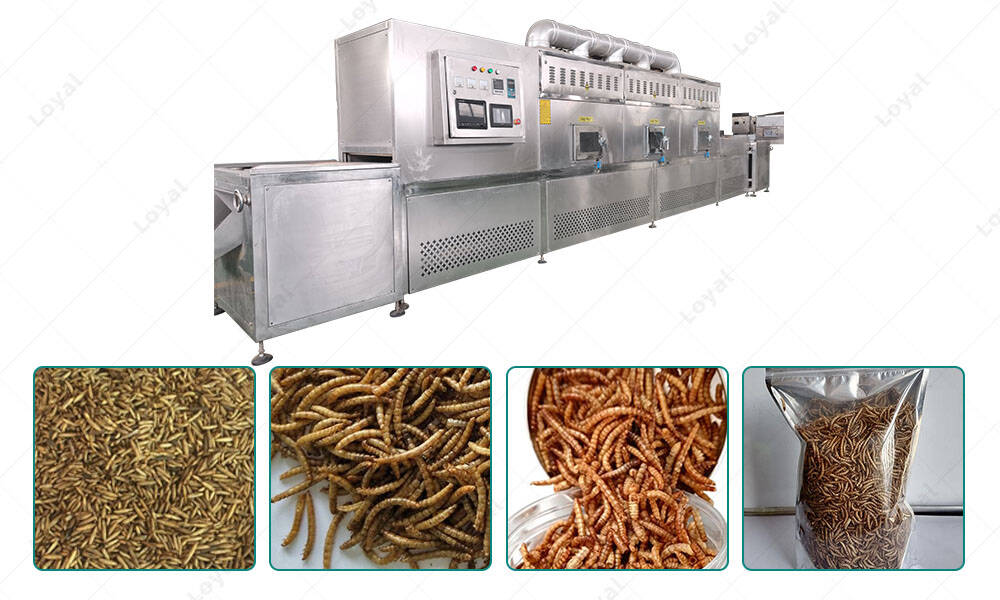
Reference
The following are five authoritative foreign literature websites in the field of Industrial food machinery:
1. Food Engineering Magazine
Website: https://www.foodengineeringmag.com/
2.Food Processing Magazine
Website: https://www.foodprocessing.com/
3.Journal of Food Engineering
Website:https://www.journals.elsevier.com/journal-of-food-engineering
4. Food Manufacturing Magazine
Website:https://www.foodmanufacturing.com/
5. International Journal of Food Science & Technology
Website:https://onlinelibrary.wiley.com/