



Small Scale Fired Instant Noodle Making Processing Machine Production Line
If you want to know more story about LOYAL brand, here can help you - https://www.facebook.com/foodmachineloyal
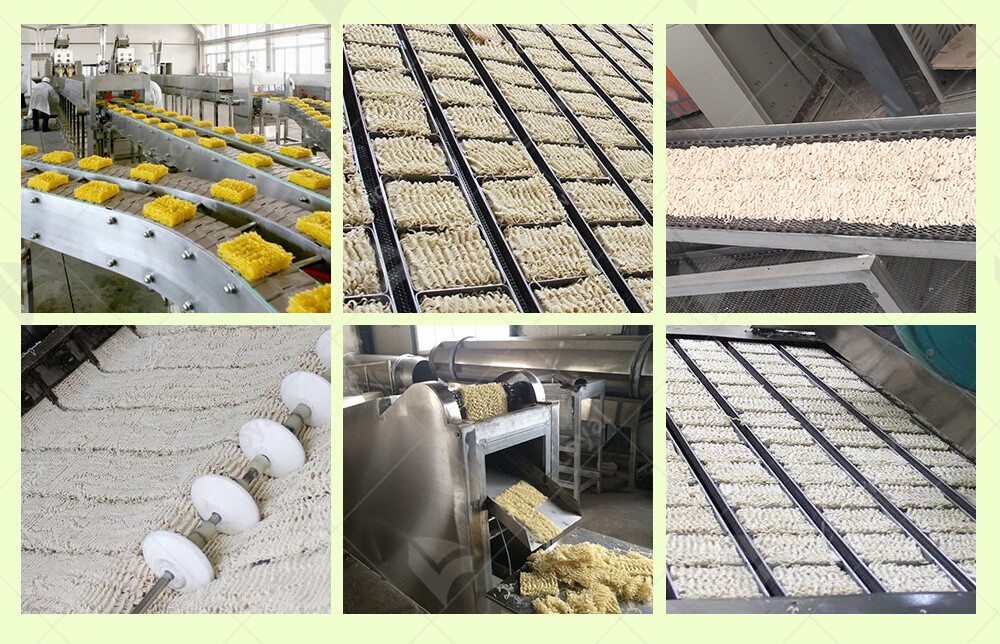
A small-scale fired instant noodle making processing machine production line is designed to efficiently produce instant noodles at a smaller capacity compared to large-scale industrial operations. These production lines are often used by small businesses, entrepreneurs, or for local markets. The production process typically involves several stages: mixing, kneading, steaming, frying, and packaging.
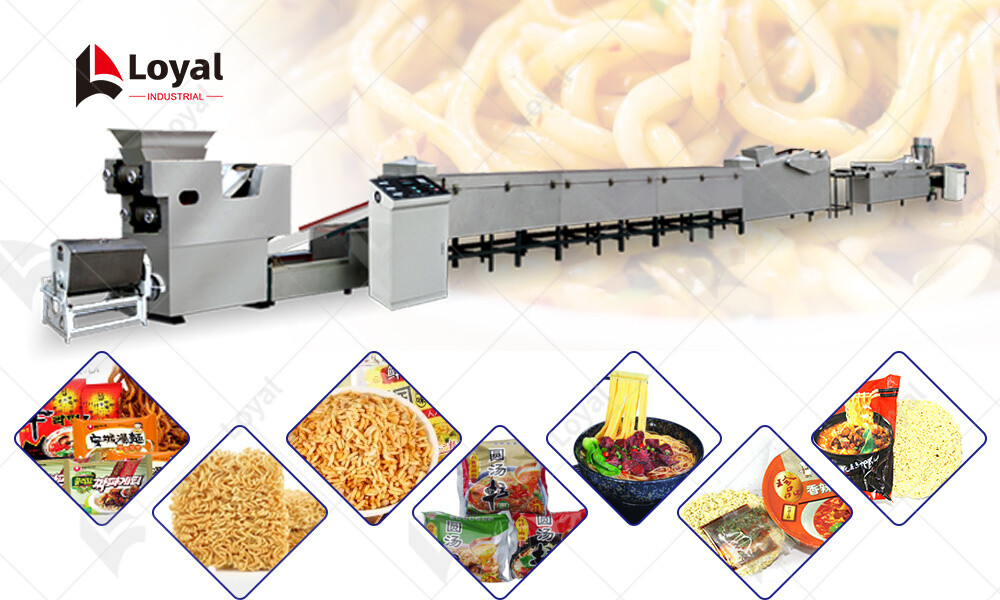
Here’s an overview of the components involved in a small-scale fired instant noodle making production line:
1. Flour Mixing Machine
Function: This machine combines wheat flour with water, salt, and other ingredients (such as vegetable powder, egg powder, etc.) to form a dough.
Capacity: Small-scale machines usually handle batches of dough ranging from 10 to 50 kg per cycle.
2. Dough Kneading Machine
Function: After mixing, the dough needs to be kneaded to ensure proper texture and consistency. The kneading machine ensures that the dough is well-mixed and smooth.
Capacity: Typically designed to handle small batches for local production.
3. Sheeting Machine
Function: The kneaded dough is passed through rollers in this machine to flatten it into thin sheets. The thickness of the dough sheets can be adjusted.
Features: This machine ensures uniform thickness of the noodle sheets and helps in the shaping process.
4. Noodle Cutting Machine
Function: After the dough is flattened, it is cut into noodle strands of the desired length. The cutting machine can be adjusted to produce different noodle shapes and sizes.
Types of Cut: Square, round, or other shapes depending on the machine configuration.
5. Steaming or Boiling Machine
Function: The noodles are steamed or boiled in this stage to ensure they are properly cooked before frying. Steaming gives the noodles a more natural texture and helps with the preservation of flavor and nutrients.
Time and Temperature: This machine operates within a controlled temperature range to ensure proper cooking.
6. Frying Machine
Function: After steaming, the noodles are deep-fried in hot oil to make them crispy. This is a crucial step in instant noodle production, as the frying process preserves the noodles and gives them the instant cooking characteristic.
Oil Filtration: Some machines come with oil filtration systems to maintain oil quality and improve operational efficiency.
7. Cooling Conveyor
Function: After frying, the noodles need to cool down to room temperature. A cooling conveyor ensures that the noodles don’t stick together and maintain their shape.
8. Packaging Machine
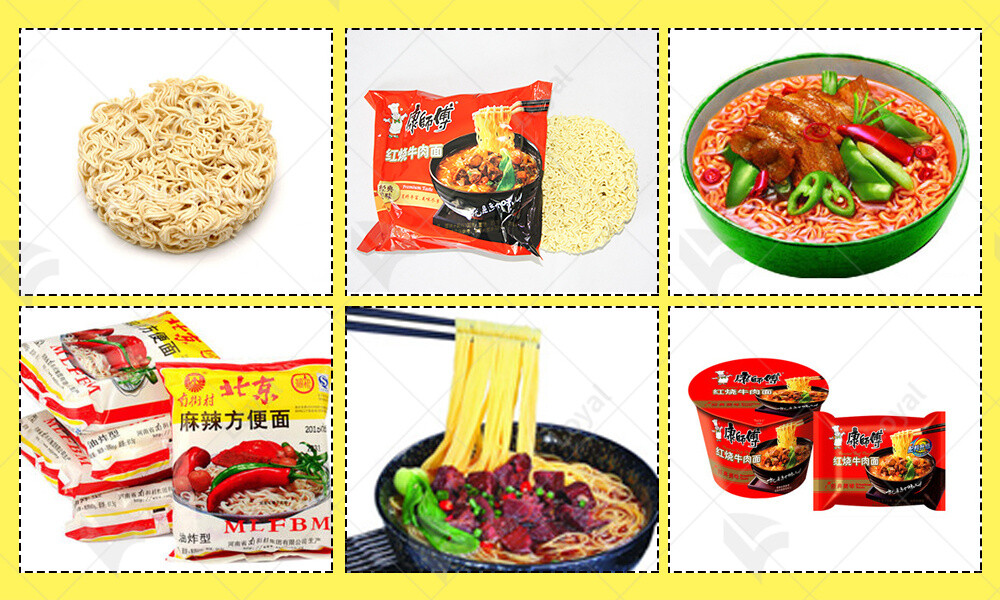
Function: The noodles are packaged in plastic or other types of packaging for sale. This can include wrapping them into individual packs or bulk packaging, depending on the target market.
Automation: Some small-scale production lines include automated weighing and sealing systems.
Key Considerations for Small-Scale Instant Noodle Production:
1. Capacity: Small-scale lines typically produce between 500 kg to 5 tons of instant noodles per day, depending on the machine configuration and the business scale.
2. Power Supply: These machines generally require standard electricity (220V or 380V), but it’s important to ensure a stable power supply, especially for the frying and steaming machines.
3. Material Quality: The quality of ingredients such as wheat flour and seasonings will directly impact the final product.
4. Labor Requirements: Some machines are semi-automatic or fully automatic, reducing the need for manual labor, but some human supervision is often necessary.
5. Maintenance: Regular maintenance and oil changes (for frying machines) are essential to keep the machinery running efficiently.
Advantages of Small-Scale Noodle Production Lines:
Lower Investment Cost: Smaller production lines are less expensive to purchase and set up, making them ideal for startups or local businesses.
Flexibility: These lines allow businesses to experiment with different flavors, packaging, and noodle types, catering to niche markets.
Space-Saving: Compact machines are designed to fit into smaller spaces, making them suitable for smaller production facilities or kitchens.
Reference
The following are five authoritative foreign literature websites in the field of Industrial food machinery:
1. Food Engineering Magazine
Website: https://www.foodengineeringmag.com/
2.Food Processing Magazine
Website: https://www.foodprocessing.com/
3.Journal of Food Engineering
Website:https://www.journals.elsevier.com/journal-of-food-engineering
4. Food Manufacturing Magazine
Website:https://www.foodmanufacturing.com/
5. International Journal of Food Science & Technology
Website:https://onlinelibrary.wiley.com/