



Discover The Secret To Perfect instant rice porridge machine line: instant rice porridge machine line Recipes
Introduction - Importance of enhancing production efficiency and energy saving.
Introduction
In the highly competitive food processing industry, the ability to enhance production efficiency and implement energy-saving measures is crucial for staying ahead. One of the key technologies revolutionizing this sector is the fully automatic instant rice porridge machine line. These advanced systems are designed to streamline production, reduce energy consumption, and deliver high-quality products consistently. Understanding the importance of these factors is essential for food machinery experts and industry stakeholders.
Enhancing Production Efficiency
Efficiency in production is not just about increasing output; it’s about optimizing every aspect of the process. A fully automatic instant rice porridge machine lineintegrates advanced automation technologies, which minimize human intervention and reduce errors. This leads to a more consistent product and a significant reduction in waste. By automating repetitive tasks, these machines free up skilled workers to focus on more complex and strategic activities, further boosting overall productivity.
Energy Saving
Energy consumption is one of the major operational costs in food manufacturing. Implementing energy-saving technologies within the instant rice porridge machine line can lead to substantial cost savings and a lower environmental impact. These systems are equipped with energy-efficient motors, smart sensors, and control systems that optimize energy use throughout the production process. By monitoring and adjusting energy usage in real-time, these machines help manufacturers achieve their sustainability goals while maintaining high production standards.

Overview of Fully Automatic Instant Rice Porridge Machine Line
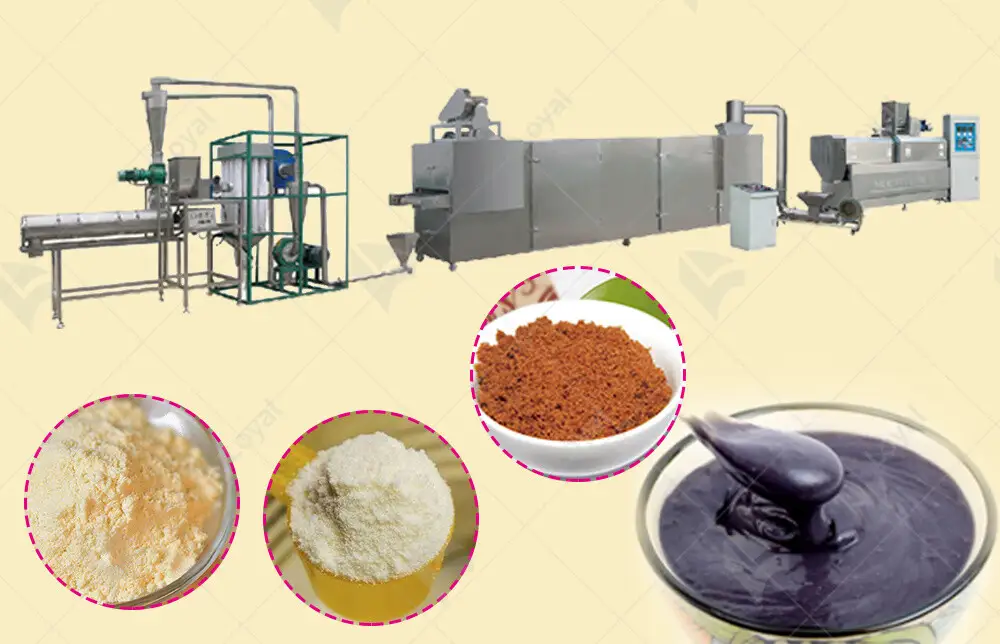
The fully automatic instant rice porridge machine line represents a significant advancement in the food processing industry. This state-of-the-art machinery is designed to produce high-quality instant rice porridge efficiently and sustainably. The integration of cutting-edge technology ensures that the production process is streamlined, cost-effective, and capable of meeting the demands of large-scale operations.
1.Detailed Description of the Machine Line
A fully automatic instant rice porridge machine line consists of several key components, each playing a vital role in the production process. These include:
Raw Material Handling System | This initial stage involves the automated handling and precise measurement of raw materials. The system ensures that the right quantities of rice, water, and other ingredients are used, maintaining consistency and quality. |
Cooking and Blending Units | At the heart of the machine line are the cooking and blending units. These components are designed to cook the rice to perfection while blending it with other ingredients to achieve the desired texture and flavor. Advanced temperature controls and mixing mechanisms ensure uniform cooking and blending, critical for producing high-quality instant rice porridge. |
Drying and Dehydration Equipment | Once the rice porridge is cooked and blended, it moves to the drying and dehydration stage. This equipment uses energy-efficient methods to remove moisture, ensuring the porridge has a long shelf life without compromising on taste or nutritional value. |
Packaging System | The final stage of the process involves the packaging system. This fully automated system packages the instant rice porridge into various formats, ready for distribution. The packaging system is designed to be flexible, accommodating different packaging types and sizes to meet market demands. |
2.Key Components and Their Roles
Each component of the instant rice porridge machine line is engineered for optimal performance and efficiency. The raw material handling system reduces wastage and ensures precise ingredient measurement. The cooking and blending units utilize advanced technologies to maintain consistent cooking standards. The drying and dehydration equipment employs energy-saving techniques, reducing operational costs. Finally, the packaging system ensures that the product is ready for the market, maintaining the integrity and quality of the porridge.
3.Advantages of Fully Automatic Systems
The transition to fully automatic instant rice porridge machine lines offers numerous advantages over traditional methods. Automation significantly reduces the need for manual labor, thereby decreasing the likelihood of human error and increasing overall productivity. Furthermore, these systems are designed to be highly efficient, utilizing less energy and reducing waste, which contributes to lower operational costs and a smaller environmental footprint.
4.Fully automatic systems also offer the flexibility to scale production up or down based on demand, ensuring that manufacturers can respond quickly to market changes without compromising on quality. The precision and consistency offered by these systems result in a superior product that meets the high standards of consumers and regulatory bodies alike.
Strategies for Enhancing Production Efficiency
In the quest to maximize the potential of a fully automatic instant rice porridge machine line, implementing effective strategies for enhancing production efficiency is paramount. These strategies focus on optimizing processes, reducing downtime, and leveraging advanced technologies to achieve superior performance and output.
1.Process Optimization Techniques
Optimizing the production process is the cornerstone of enhancing efficiency. For an instant rice porridge machine line, this involves a thorough analysis of each stage of production, from raw material handling to packaging. By identifying bottlenecks and inefficiencies, manufacturers can implement targeted improvements.
Streamlined Workflow | Organizing the workflow in a logical, sequential manner minimizes unnecessary movement and delays. This can be achieved through the layout design of the production line, ensuring that each step flows seamlessly into the next. |
Automation of Repetitive Tasks | Automation plays a crucial role in process optimization. By automating repetitive tasks, such as ingredient measurement and mixing, the instant rice porridge machine line reduces the risk of human error and increases the speed and accuracy of production. |
Real-time Monitoring and Adjustments | Implementing real-time monitoring systems allows for the continuous assessment of the production process. Sensors and control systems can detect anomalies and make immediate adjustments, ensuring that the production remains within optimal parameters. |
2.Reducing Downtime and Maintenance
Minimizing downtime is essential for maintaining high production efficiency. Downtime can be caused by machine malfunctions, maintenance requirements, or supply chain disruptions. Strategies to reduce downtime include:
Preventive Maintenance | Establishing a preventive maintenance schedule ensures that the instant rice porridge machine line remains in peak condition. Regular inspections and servicing can preemptively address potential issues before they result in costly breakdowns. |
Quick Changeover Techniques | Implementing quick changeover techniques, such as modular components and standardized procedures, reduces the time required to switch between different production runs. This flexibility allows manufacturers to adapt swiftly to changing market demands. |
Inventory Management | Effective inventory management ensures that raw materials and spare parts are always available when needed. This prevents production delays caused by shortages and facilitates smooth, continuous operation. |
3.Enhancing Machine Performance
Maximizing the performance of the instant rice porridge machine line involves leveraging advanced technologies and best practices. Key strategies include:
Energy-efficient Technologies | : Integrating energy-efficient technologies reduces operational costs and enhances machine performance. Energy-efficient motors, variable frequency drives, and smart control systems optimize energy consumption without compromising productivity. |
Training and Skill Development | Investing in the training and skill development of operators ensures that they are proficient in using the machinery and can troubleshoot issues effectively. Skilled operators can maximize the potential of the instant rice porridge machine line, maintaining high efficiency and quality. |
Continuous Improvement | Adopting a culture of continuous improvement encourages ongoing evaluation and enhancement of the production process. Regular feedback from operators, coupled with data analysis, can identify areas for improvement and drive incremental gains in efficiency. |

Energy Saving Techniques
Incorporating energy-saving techniques into the operation of a fully automatic instant rice porridge machine line is critical for reducing operational costs and enhancing overall efficiency. Energy-efficient practices not only contribute to significant cost savings but also support sustainability goals. Here, we explore various strategies and technologies designed to optimize energy use in the production of instant rice porridge.
1. Implementing Energy-Efficient Technologies
One of the primary ways to reduce energy consumption is by utilizing energy-efficient technologies throughout the instant rice porridge machine line. Key technologies include:
-High-Efficiency Motors: Replacing standard motors with high-efficiency variants can lead to substantial energy savings. These motors consume less power while delivering the same or greater output, reducing the overall energy footprint of the machine line.
-Variable Frequency Drives (VFDs): VFDs adjust the speed of electric motors based on demand, ensuring that energy is used more efficiently. By matching motor speed to the actual load requirements, VFDs minimize energy wastage during periods of lower demand.
-Advanced Heating Systems: Utilizing modern, energy-efficient heating systems, such as induction or infrared heaters, can significantly reduce the energy required for cooking and drying processes. These systems provide precise temperature control, reducing energy consumption and improving product quality.
2. Optimizing Process Control
Effective process control systems are essential for energy conservation in a fully automatic instant rice porridge machine line. Implementing these systems can optimize energy usage throughout the production process:
-Smart Sensors and Controls: Incorporating smart sensors and control systems enables real-time monitoring of energy consumption and process parameters. By analyzing this data, manufacturers can identify inefficiencies and make adjustments to optimize energy use.
-Automated Energy Management: Energy management systems can automate the regulation of energy consumption based on real-time production needs. These systems can schedule energy-intensive processes during off-peak hours or when energy prices are lower, reducing overall costs.
3. Reducing Heat Loss
Minimizing heat loss is crucial for maintaining energy efficiency in the instant rice porridge machine line. Techniques to reduce heat loss include:
-Insulation: Proper insulation of cooking and drying units helps to retain heat and reduce energy required to maintain optimal temperatures. High-quality insulation materials can significantly cut down on heat loss and improve energy efficiency.
-Heat Recovery Systems: Implementing heat recovery systems captures waste heat from the production process and reuses it for other stages, such as pre-heating incoming water or ingredients. This practice reduces the need for additional heating and lowers energy consumption.
4. Maintenance and Calibration
Regular maintenance and calibration of the instant rice porridge machine line are essential for sustaining energy efficiency:
-Preventive Maintenance: Scheduled preventive maintenance ensures that all components of the machine line, including motors, pumps, and heating systems, operate at peak efficiency. Regular checks and servicing prevent energy losses due to equipment malfunctions or inefficiencies.
-Calibration: Accurate calibration of sensors and control systems is crucial for optimal energy use. Ensuring that these systems are correctly calibrated helps prevent overuse of energy and maintains the efficiency of the production process.
5. Employee Training and Awareness
Educating employees about energy conservation practices can further enhance the energy efficiency of the instant rice porridge machine line:
-Training Programs: Implementing training programs for operators and maintenance staff on energy-saving techniques and best practices can lead to more conscious and efficient use of machinery and resources.
-Energy Conservation Culture: Promoting a culture of energy conservation within the organization encourages all employees to actively seek and implement ways to reduce energy consumption.

Future Trends in Instant Rice Porridge Machine Line Technology
1. Integration of IoT and Smart Technologies
The Internet of Things (IoT) and smart technologies are increasingly being integrated into food machinery, including instant rice porridge machine lines. These advancements bring several benefits:
-Real-time Monitoring and Data Analytics: IoT-enabled sensors and devices allow for real-time monitoring of production parameters. This data can be analyzed to optimize processes, predict maintenance needs, and improve overall efficiency. Manufacturers can gain insights into every aspect of the production line, from ingredient quality to energy consumption.
-Predictive Maintenance: Smart technologies can predict when equipment is likely to fail or require maintenance. By addressing issues before they cause downtime, predictive maintenance helps maintain continuous production and reduces unexpected costs.
- **Remote Control and Automation**: IoT integration enables remote monitoring and control of the instant rice porridge machine line. Operators can adjust settings and troubleshoot issues from any location, increasing flexibility and reducing the need for on-site staff.
2. Advanced Automation and Robotics
Automation and robotics continue to advance, bringing new capabilities to instant rice porridge machine lines. Key trends include:
-Robotic Process Automation (RPA): RPA can automate complex, repetitive tasks with precision and speed. In the context of instant rice porridge production, robots can handle everything from ingredient mixing to packaging, ensuring consistency and reducing labor costs.
-Collaborative Robots (Cobots): Cobots work alongside human operators, enhancing productivity and safety. They can perform tasks that are too dangerous or monotonous for humans, such as handling hot materials or operating in high-speed environments.
-Artificial Intelligence (AI): AI algorithms can optimize production processes by learning from historical data and making real-time adjustments. AI-driven systems can improve product quality, minimize waste, and adapt to changing production requirements.
3. Sustainable and Eco-friendly Technologies
Sustainability is a major focus in the food industry, and instant rice porridge machine lines are no exception. Future trends emphasize eco-friendly technologies and practices:
-Energy-efficient Systems: Advances in energy-efficient technologies will continue to reduce the environmental impact of production lines. Innovations such as energy-efficient motors, heat recovery systems, and smart energy management will become standard features.
-Sustainable Materials and Packaging: The use of sustainable materials and eco-friendly packaging solutions will become more prevalent. Manufacturers will adopt biodegradable and recyclable packaging options to reduce waste and meet consumer demand for environmentally responsible products.
-Waste Reduction Technologies: Technologies that minimize waste during production will gain prominence. For example, precision dosing systems can ensure that exact amounts of ingredients are used, reducing waste and improving cost efficiency.
Reference
The following are five authoritative foreign literature websites in the field of Industrial food machinery:
1. Food Engineering Magazine
Website: https://www.foodengineeringmag.com/
2.Food Processing Magazine
Website: https://www.foodprocessing.com/
3.Journal of Food Engineering
Website:https://www.journals.elsevier.com/journal-of-food-engineering
4. Food Manufacturing Magazine
Website:https://www.foodmanufacturing.com/
5. International Journal of Food Science & Technology
Website:https://onlinelibrary.wiley.com/