



High-Efficiency Nutrition Bar Production Line Selection Guide: How to Balance Automation and Flexibility
If you want to know more story about LOYAL brand, here can help you - https://www.facebook.com/foodmachineloyal
The global nutrition bar market continues to expand, driven by consumer demand for convenient, healthy, and functional foods. For manufacturers, this growth presents a critical production challenge: the need for high efficiency to compete on cost and scale, versus the need for operational flexibility to respond to rapidly evolving consumer trends. Investing in a nutrition bar production line is a significant capital expenditure, and the choice between a highly automated system and a highly flexible one can define a company's competitive edge for years to come. This guide provides a comprehensive, objective framework to help producers navigate this complex decision. We will delve into the core components of nutrition bar making machinery, analyze the trade-offs between automation and flexibility, and provide a practical, data-driven approach to selecting a line that aligns with your specific business strategy.

The Evolving Landscape and the Production Challenge
The nutrition bar sector has evolved far beyond simple energy bars. Today's market encompasses a wide array of products, including high-protein bars, gluten-free granola bars, keto-friendly snacks, and bars fortified with probiotics or adaptogens. This diversification, while a key growth driver, places immense pressure on manufacturing capabilities.
The central dilemma for any business investing in a nutrition bar production line is navigating the spectrum between pure automation and pure flexibility. On one end, a fully automated line maximizes output and minimizes unit cost but often at the expense of changeover agility. On the other, a flexible nutrition bar making machinery setup allows for rapid product innovation and small batches butmay not achieve the same low-cost economics. The goal is not to find a mythical "perfect" solution but to make a strategic decision that optimally balances these two forces based on a clear understanding of your business's current needs and future ambitions. This guide aims to demystify that process.
Foundational Step: A Deep Dive into Internal Business Requirements
Before evaluating any equipment, a thorough internal analysis is paramount. This foundational step ensures that your investment supports your business strategy rather than constraining it.
Comprehensive Product Portfolio Mapping
Begin by cataloging your entire product range and creating a 3-5 year innovation roadmap. Critically assess the physical attributes of your recipes. Do you use sticky nut butters that require heavy-duty pumps? Are your inclusions (e.g., whole nuts, crunchy clusters) delicate and prone to breakage? A line designed for a homogeneous protein mix will struggle with chunky, heterogeneous granola bars. Understanding these nuances is the first step in specifying the required capabilities of your nutrition bar making machinery.
Quantifying Production Needs
Accurate data is crucial. Calculate your current annual production volume and identify seasonal peaks. More importantly, project your growth expectations. A line operating at 90% capacity from day one has no room for growth, leading to a premature need for another major investment. Simultaneously, analyze your batch size economics. If you frequently run small batches for niche products, the high changeover downtime of an inflexible line can cripple overall equipment effectiveness (OEE).
Defining Operational and Financial Constraints
Look beyond the sticker price of the nutrition bar production line. A Total Cost of Ownership (TCO) analysis provides a more accurate financial picture, incorporating installation, energy consumption, preventive maintenance, spare parts, and the labor required to operate the system. Furthermore, conduct a facility audit. Ensure you have the floor space, ceiling height, and necessary utilities (e.g., 480V power, process water, compressed air) to support the new equipment.
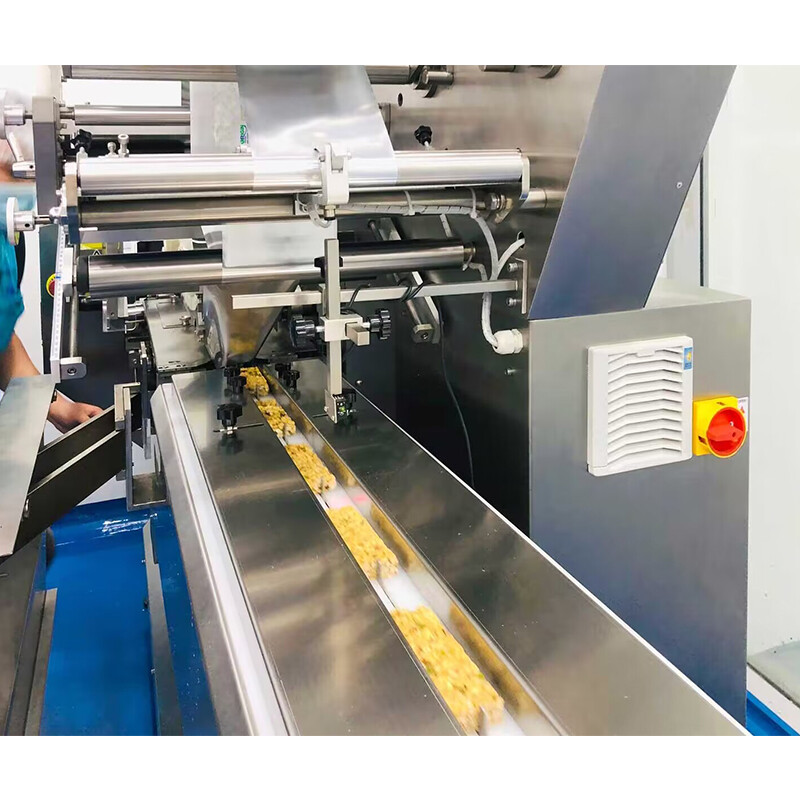
Technical Deep Dive: Core Components of a Nutrition Bar Line
A modern nutrition bar production line is a synchronized system of integrated machines. Understanding each component's role is key to evaluating a supplier's proposal.
Mixing & Preparation: This stage involves combining dry and wet ingredients into a homogeneous mass. Batch mixers are versatile for various recipes and batch sizes, while continuous mixers offer non-stop output for high-volume, single-recipe production.
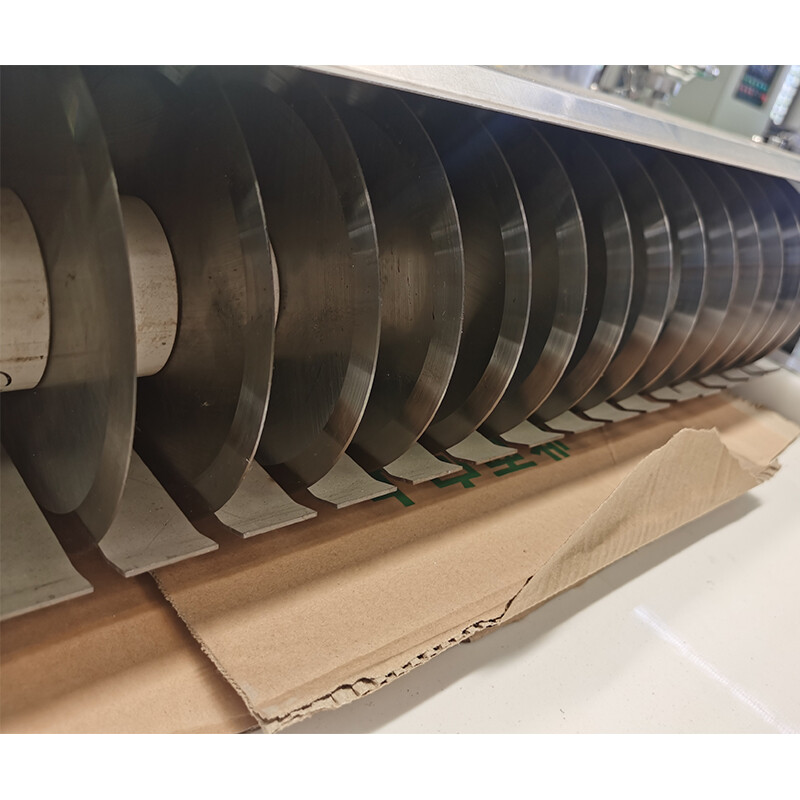
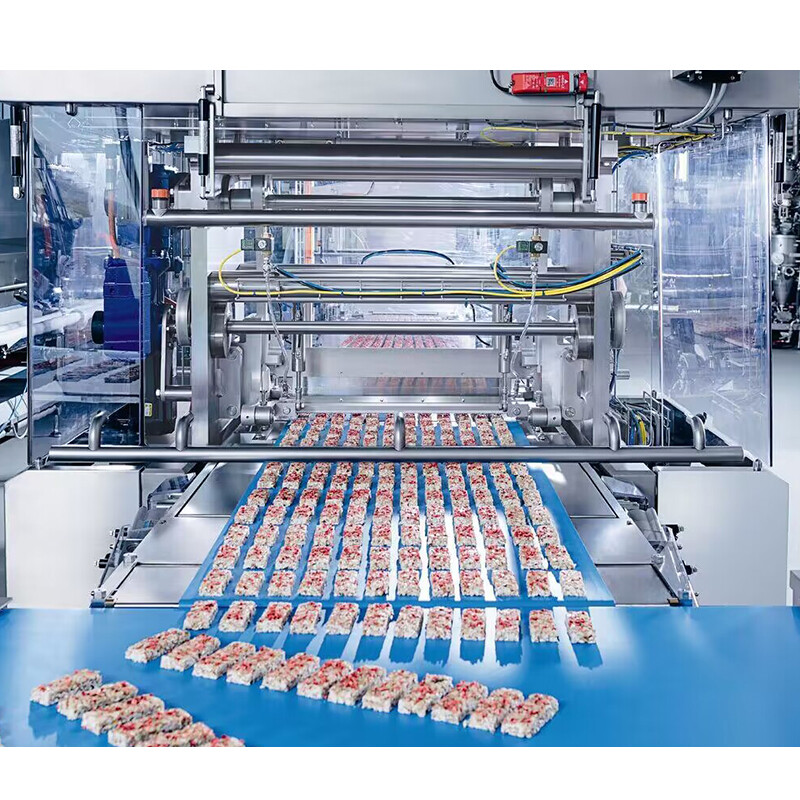
Forming & Shaping: This is where the bar takes its form. Extrusion forces the mix through a die to create a continuous slug that is cut to length, ideal for dense, uniform bars. Sheeting and cutting rolls the mass into a precise sheet and cuts it into shapes, excellent for layered or crunchy-textured bars. Depositing or molding is used for more fluid batters, allowing for complex shapes and even injection of fillings.
Baking & Cooling: Multi-zone ovens provide precise control over temperature, humidity, and bake time, which is critical for achieving the correct moisture content, texture, and shelf stability. Cooling tunnels then set the bar's structure through controlled, gradual temperature reduction, preventing condensation in packaging.
The entire process is orchestrated by a central Programmable Logic Controller (PLC), which ensures synchronization, logs production data for traceability, and allows for recipe storage.
The Case for Maximum Automation: Pursuing Peak Efficiency
For businesses focused on dominating the mass market with a limited product range, high automation is the path to unrivaled efficiency.
Unpacking the Benefits
A fully automatednutrition bar production line can achieve staggering outputs, often exceeding 1,200 bars per minute. This scale dramatically reduces the labor cost per unit and the final cost of goods sold (COGS). Furthermore, automation guarantees product consistency. Every bar will have identical weight, dimensions, and composition, minimizing giveaway and ensuring brand integrity. From a safety perspective, enclosed machinery minimizes human contact with moving parts and raw materials, reducing the risk of accidents and contamination.
The Trade-offs and Hidden Challenges
The primary barrier is the high capital expenditure (CapEx), which can run into millions of dollars for a complete turnkey system. The most significant operational trade-off is inflexibility. Changeovers between different bar types can be complex, requiring mechanical adjustments and extensive line cleaning, leading to several hours of costly downtime. Finally, maintaining such a complex system requires a highly skilled technical team, and the lead time for specialized spare parts can be long.

The Imperative for Flexibility: Enabling Agility and Innovation
For brands that compete on variety, innovation, and speed-to-market, flexibility in nutrition bar making machinery is not a luxury but a necessity.
Defining Operational Flexibility
Flexibility manifests in several ways. Quick Changeover (QCO) systems, using tool-less adjustments and digital recipe recall on the PLC, can slash changeover times from hours to minutes. A modular design allows a manufacturer to start with a basic forming and cooling system and later add a coating enrober or a second filling depositor. Finally, flexible equipment is designed with wide tolerances, capable of handling everything from fine powders to large, sticky inclusions without clogging.
The Strategic Business Advantages
This agility directly accelerates New Product Development (NPD). R&D teams can run small, cost-effective batches for market testing, allowing for rapid iteration. It also makes fulfilling private-label orders or producing limited-edition runs economically viable. In a volatile market, a flexible nutrition bar production line provides resilience, allowing a company to pivot production quickly in response to ingredient supply issues or sudden shifts in consumer demand.
A Practical Framework for Strategic Selection
This framework translates the concepts above into an actionable selection process.
Strategic Self-Assessment and Prioritization
Use a scoring matrix to quantify your strategic priorities. This forces a objective discussion about what truly matters for your business.
Strategic Priority Scoring Matrix
Strategic Priority | Description | Weight (1-5, 5 being highest) |
Lowest Cost Per Unit | Dominating the market through price and volume. | 5 |
Maximum Product Variety | Offering the widest range of flavors, formats, and ingredients. | 2 |
Speed to Market | Rapidly prototyping and launching new products. | 4 |
Adaptability to Change | Ability to pivot production based on trends/supply. | 3 |
Labor Cost Reduction | Minimizing direct labor on the production floor. | 4 |
A business scoring highly on "Lowest Cost" and "Labor Reduction" leans toward Automation. High scores in "Variety" and "Speed to Market" indicate a need for Flexibility.
Technical Evaluation and Supplier Dialogue
When you receive proposals, use a standardized table to compare them objectively. Demand data to support claims, especially regarding changeover times.
Key Equipment Specification Comparison
| Specification | Supplier A | Supplier B | Your Requirement |
| Max Line Speed | 1,000 bars/min | 600 bars/min | 800 bars/min |
| Avg. Changeover Time | 120 minutes | 25 minutes | < 45 minutes |
| Recipe Memory Slots | 50 | 200 | 100+ |
| Power Consumption | 120 kW | 85 kW | Minimize |
| Quoted Price | $1.8M | $1.4M | < $1.6M |
This data-driven approach moves the conversation beyond marketing and focuses on the metrics that impact your bottom line.
Financial Justification and Partner Selection
Finalize your decision with a robust TCO analysis. A slightly more expensive, flexible line with lower energy costs and faster changeovers may have a better TCO than a cheaper, inefficient one. Crucially, evaluate the supplier as a long-term partner. Their ability to provide prompt technical support, training, and spare parts is as important as the nutrition bar making machinery itself. Always insist on a production trial using your own recipeto validate performance claims.
Summary and Future Outlook
In summary, choosing the right nutrition bar production line is all about finding the smart balance between two key ideas: automation (making a lot of one thing cheaply and efficiently) and flexibility (being able to make different things quickly). There's no single best answer for every company. You need to pick the nutrition bar making machinery that best fits your own products, your growth plans, and your budget.
The best choice comes from knowing your own business first. Then, you can talk to equipment suppliers using clear data and ask the right questions about speed, changeover time, and cost. Remember, you're not just buying a machine; you're choosing a partner to help your business grow.
A Look Ahead: What's Next for Nutrition Bar Production?
The nutrition bar production line of the future won't just be faster or more flexible; it will be smarter and easier to run. Here are some practical developments we can expect to see:
Smarter and More Connected Machines (The Industrial Internet of Things - IIoT): Imagine a factory where allthe nutrition bar making machinery can talk to each other. Sensors on the line will constantly collect data. This means you could get a text message on your phone if a motor is starting to get too hot, warning you to fix it before it breaks down and stops production. This "predictive maintenance" will prevent a lot of unexpected headaches and downtime.
"Lights-Out" Production for Simple Tasks: For very large-scale, standard products, we might see more "lights-out" manufacturing. This means the nutrition bar production line could run completely on its own in a dark factory for certain steps, like overnight. Advanced robots would handle tasks like moving materials or packing finished boxes. This is best for simple, high-volume bars where human supervision isn't needed every minute.
AI that Learns from Mistakes:Cameras and computers will get much better at spotting problems. Future systems won't just see a broken bar and reject it. They will use Artificial Intelligence (AI) to learn from the mistakes. For example, if the system notices that bars are starting to get too sticky, it could automatically adjust the mixer or the oven settings to fix the problem in real-time, ensuring consistent quality without constant manual tweaking.
Hyper-Flexibility for Customization:The trend for personalized nutrition will reach the factory floor. We could see smaller, super-flexible production lines that can make tiny batches. Imagine a line that can produce a box of bars just for you—with your specific protein blend, vitamins, and even your name on the label—all without slowing down the main production. This will allow brands to offer truly custom products.
Greater Focus on Sustainability:Future nutrition bar making machinery will be designed to be more environmentally friendly. This includes using less energy and water, and importantly, reducing waste. We'll see better systems that can perfectly control portions to avoid giving away extra product, and more efficient designs that are easier to clean, using less water and chemicals.
In short, the future of nutrition bar production is about making things smarter, not just harder or faster. The goal is to build lines that are more reliable, easier to control, and capable of making exactly what consumers want, when they want it, all while wasting less. This smarter approach will help companies stay competitive and responsive in a fast-moving market.
References and Further Reading
Grand View Research. "Nutrition Bars Market Size, Share & Trends Analysis Report."
Institute of Food Technologists (IFT). "Food Engineering & Processing."
EHEDG (European Hygienic Engineering & Design Group). "Guidelines on Hygienic Design."
PMMI - The Association for Packaging and Processing Technologies. "ProFood Tech."
Reference
The following are five authoritative foreign literature websites in the field of Industrial food machinery:
1. Food Engineering Magazine
Website: https://www.foodengineeringmag.com/
2.Food Processing Magazine
Website: https://www.foodprocessing.com/
3.Journal of Food Engineering
Website:https://www.journals.elsevier.com/journal-of-food-engineering
4. Food Manufacturing Magazine
Website:https://www.foodmanufacturing.com/
5. International Journal of Food Science & Technology
Website:https://onlinelibrary.wiley.com/